

Asia Pacific indigenous activists say “No to REDD”

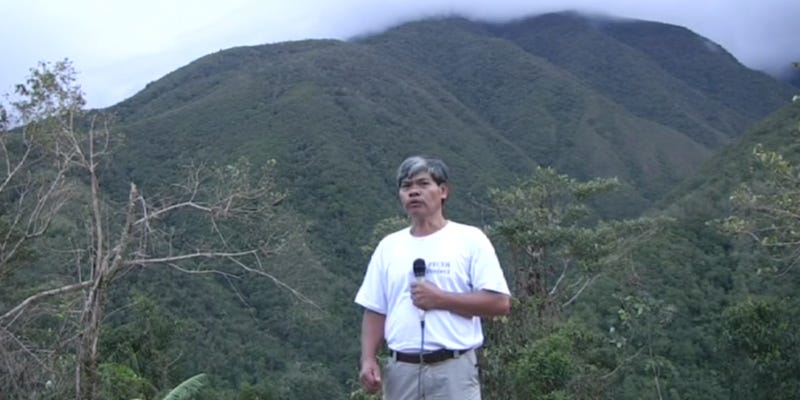
In this short video, “Lives of the Forest,” indigenous activists from the Asia Pacific region speak out against REDD. “We find that the way [the international community] took decisions for passing through this REDD mechanism is in complete exclusion of the indigenous peoples,” says Jiten Yumnam of the Meitei people in Manipur, India.
“Because indigenous peoples are not informed, are not involved in the decision making process, there is a serious issue with the denial of indigenous peoples’ right to free, prior and informed consent,” Yumnam adds.
The video was produced by indigenous activists during a participatory video facilitator training in Ifugao, in the Philippines. It was organised by the Asia Pacific Indigenous Youth Network, InsightShare, the Ifugao Resource and Development Centre and Conversations with the Earth (CWE). CWE is
“an indigenous-led multimedia initiative that amplifies indigenous voices in the global discourse on ecological and cultural challenges facing the planet, including climate change, Conversations with the Earth (CWE) is a way of listening closely to traditional custodians of the world’s biocultural diversity in order to formulate viable global responses.”
(Hat tip to Climate Connections – they posted this video yesterday.)
The following statement about the video is from CWE:
‘Lives of the Forest’ was created by indigenous activists from across the Asia Pacific region exploring the likely impacts of the UN’s REDD programme on indigenous resources and lifestyles. It was created during a participatory video facilitator training in Ifugao (Philippines) by representatives of 15 distinct indigenous communities from 8 different countries.
The film was shot entirely on location within the remote mountain community of Hungduan in Ifugao (home to the Tuali peoples – one of the many indigenous groups in the Cordillera region of the Philippines) and explores the traditional knowledge and lifestyles of the Tuali peoples including their deep connection with, and reliance upon, their Muyong (clan-owned woodlands) and communal forests as an example of an indigenous community whose way of life is threatened by programmes such as REDD. The indigenous filmmakers behind this short film assert that market-based approaches to climate change are at odds with the traditional lifestyles and belief systems of indigenous peoples and that, through such programs, governments around the world will assert ownership over the forests inhabited by indigenous communities leading to landlessness and increased loss of bio-cultural diversity.
It was planned and created by 18 indigenous activists as a collaborative filmmaking exercise during a 2-week training program in participatory video facilitation. The trainees undertook all the conceptualisation, storyboarding and filming. They made all the editing decisions during a participatory ‘paper edit’ process. The footage was edited on location with all the trainees in attendance by the trainers, whilst they received editing training and pieced together the short films created by local women and youth during community placements.
‘Lives of the Forest’ is intended as a piece of video advocacy that will add to the rich tapestry of perspectives on how best to address the climate crisis. It does not purport to represent all indigenous communities; nor does it claim to be ‘balanced’ or ‘objective’. This is collaborative polemic film-making by those whose voices are rarely heard and are always under-represented.
Comments following the original post on REDD-Monitor.org are archived here: https://web.archive.org/web/20120131130404/https://redd-monitor.org/2011/05/04/asia-pacific-indigenous-activists-say-no-to-redd/