

Civil society organisations urge Korean company SK Telecom to stop investment in Article 6.4 cook stove project in Myanmar’s military dictatorship
Since February 2021, the elected leaders of the country remain in arbitrary detention.

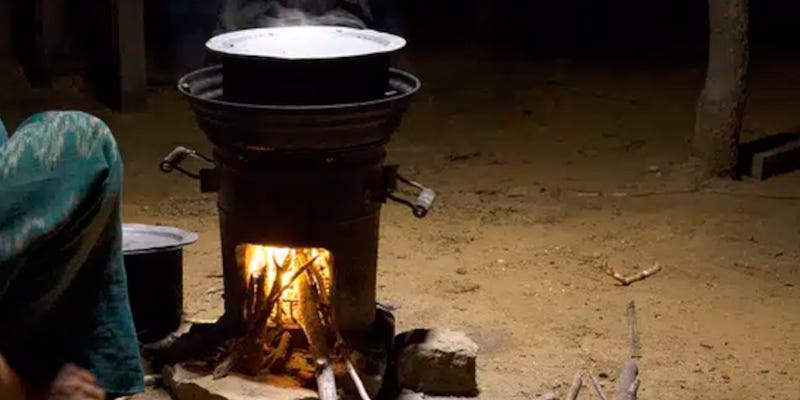
The first carbon credits approved by the UN’s Article 6.4 Supervisory Body under the Paris Agreement Crediting Mechanism were from a “clean-cooking” project in Myanmar. Since February 2021, a civil war in Myanmar has resulted in conflict, displacement and state-sponsored violence.
The military junta has targeted schools, hospitals, religious buildings, and other civilian infrastructure.
Almost 100,000 civilians have been killed. the UN states that 3.6 million people have been displaced.
Aung San Suu Kyi, who played a key role in the 2010s in Myanmar’s transition from dictatorship to partial democracy, and whose party won the November 2020 election was arrested on 1 February 2021. She, and others in the National League for Democracy remain in arbitrary detention.
In June 2026, a report by the Global Forest Coalition, Myanmar Policy Institute, Plan 1.5, Biofuelwatch, and Gibson Climate Justice Lab highlighted the problems with implementing a carbon trading project in a country that is currently run by a military junta.
Yadanar Maung, a spokesperson for Justice for Myanmar is quoted in the report as saying that,
“Partnering with MONREC [the Ministry of Natural Resources and Environmental Conservation] in a project tied to international carbon market mechanisms lends false legitimacy to the military junta and whitewashes its international crimes.”

The Climate Change Center, the South Korean NGO running the carbon project in Myanmar, gave a dreadfully weak response to the criticism. As Biofuelwatch’s Almuth Ernsting pointed out in a comment on REDD-Monitor, the response “leaves many open questions”.
The reality is that carrying out a carbon trading project with the Myanmar military dictatorship to allow greenhouse gas emissions in Korea to continue is simply indefensible.

Letter to SK Telecom
On 11 August 2026, 28 civil society organisations sent a joint letter to Jung Jae-heon, the CEO of SK Telecom.
SK Telecom is one of 12 SK Group affiliated companies that have invested in the project in Myanmar since 2018. The civil society organisations’ letter demands that SK Telecom:
end the company’s investment in the project;
refrain from trading the carbon credits already generated by the project; and
establish an internal system to fairly and accurately assess and verify international mitigation projects.
In a statement, Zaw Tuseng, director of the Myanmar Policy Institute, comments that,
“Communities in Sagaing and Magway are living through airstrikes, displacement, the destruction of villages and severe restrictions on movement. Under these conditions, credible monitoring, meaningful consultation and informed community consent cannot simply be assumed. SK Telecom should not use carbon credits generated under such circumstances to claim climate progress. It must disclose its involvement, suspend the use of these credits and support an independent, conflict-sensitive review that listens directly to affected communities.”
The organisations request a response by 24 August 2026.
The civil society letter is posted here in full:
Recipient
Jae-heon Jeong
SK Telecom President & CEOSender
Plan 1.5 and
27 Civil Society Organizations and Coalitions10 August 2026
Dear Jae-heon Jeong,
We, a group of civil society organizations, are writing to urge SK Telecom to end investment in the Myanmar Cookstove project.
We are deeply concerned about the human rights violations and the over-crediting of greenhouse gas (GHG) emission reductions associated with the Myanmar cookstove project (PoA 10471), in which the SK Group has invested. In light of SK Group’s DBL (Double Bottom Line) philosophy, which emphasizes the pursuit of both economic and social value, we urge SK Telecom to halt its investment in this project and establish a robust framework for responsible climate and human rights risk management.
Since March 2018, your company has invested in this project and, in February this year, received approval for the issuance of carbon credits under the Paris Agreement Crediting Mechanism (PACM). According to media reports, Climate Change Center (CCC), which manages the project, stated that SK Group secured 648,783 provisionally issued PACM carbon credits through this project. As the first-ever approval for issuance of PACM credits worldwide, these credits have attracted significant attention from civil society organizations in both Korea and around the world.
Unfortunately, the attention directed at this project — and that SK Telecom has received as one of its investors — is not due to its contribution to climate action or to improving the lives of people in Myanmar. Instead, it reflects mounting concerns over serious human rights abuses associated with the project and the credibility of the PACM, under which these carbon credits will be issued.
Human Rights Concerns
The Myanmar cookstove project aims to reduce greenhouse gas emissions by replacing traditional household cookstoves with improved cookstoves across Myanmar. The project developer, CCC, claims that the project not only generates carbon credits but also expands energy access, lowers household fuel costs, helps prevent deforestation, and reduces the health risks and domestic burdens faced by women and children.
The reality, however, tells a very different story
Since Myanmar’s 2021 attempted military coup, the project has continued without adhering to even the most basic ESG principles. Its local implementing partner in the Central Dry Zone is the Dry Zone Greening Department (DZGD), a government agency operating under the unlawful authority of Myanmar’s military junta. Furthermore, the project is being implemented in regions that have witnessed some of the country’s most severe political violence and attacks against civilians.
Myanmar civil society organizations have warned that “collaborating with the DZGD on projects linked to international carbon market mechanisms grants administrative legitimacy to the military regime and effectively provides impunity for its violations of international law.”
During the crediting period for which credit issuance has been approved by PACM, in the townships where the project was implemented in the Sagaing, Magway and Mandalay regions, 1,153 incidents of political violence and physical attacks by armed groups were recorded, including 298 attacks by the military targeting civilians. Local communities suffered casualties, widespread destruction of public infrastructure, and forced displacement. Sagaing alone accounts for approximately 35% of all internally displaced persons (IDPs) in Myanmar, while food insecurity has become increasingly widespread. Under these circumstances, it is highly questionable whether local residents were even able to maintain their normal cooking practices, let alone benefit from the distribution and use of “improved cookstoves.”
CCC portrays women as the project’s primary beneficiaries, claiming that it reduces their domestic burdens. In reality, however, women have been excluded from decision-making while their unpaid labor has effectively been converted into carbon credits. One of the project’s monitoring reports shows that approximately 80% of the 231 surveyed households were represented by male heads of household, indicating that the voices of women — the primary users of the cookstoves — were inadequately reflected in the survey findings.
CCC also maintains that the project was implemented in accordance with international carbon market rules and that its emission reductions were quantified using approved methodologies. However, because of the ongoing conflict, the independent third-party validation was conducted remotely through online interviews without any on-site verification. During the validation process, only two women were interviewed.
We therefore express our profound concern that this project continues to operate in areas devastated by military attacks on civilians, in partnership with an institution controlled by Myanmar’s military junta, while portraying those affected by the violence as beneficiaries of the project.
Over-Crediting of Greenhouse Gas Emission Reductions Concerns
The project’s climate benefits have also been significantly overstated.
According to a quantitative assessment conducted by the European climate think tank Carbon Market Watch (CMW), the project received approval for approximately 7.2 times more PACM credits than the actual emissions reductions likely achieved — even if one accepts the controversial assumptions about biomass cookstove projects being capable of delivering emissions reductions. In other words, most of the credits your company secured through this project are ‘hot air.’
This over-crediting is not the result of a simple calculation error. Rather, it reflects fundamental flaws in the design of cookstove carbon credit methodologies. For years, academic researchers and international civil society organizations have warned that these methodologies systematically favor project developers by relying on unrealistic assumptions for key parameters—such as the fraction of non-renewable biomass (fNRB) and stove stacking—rather than scientifically robust estimates. Most critically, the classification of biomass as “renewable” or “non-renewable” embodies a double standard: fuelwood collected and burned by women for household cooking is classified as “non-renewable biomass,” whereas industrial biomass combustion is routinely classified as “renewable.” As a result, systematic over-crediting has become an inherent feature of these methodologies.
In particular, AMS-II.G, the methodology on which this project is based, was identified in a 2024 peer-reviewed study as exhibiting the highest level of over-crediting among all cookstove methodologies. It also failed to meet the Core Carbon Principles (CCPs) established by the Integrity Council for the Voluntary Carbon Market (ICVCM), underscoring broader concerns about its environmental integrity.
We are also deeply concerned that these over-credited carbon credits could be used for compliance under the Korean Emissions Trading Scheme (K-ETS) or counted toward Korea’s Nationally Determined Contribution (NDC). Allowing credits that do not represent genuine emission reductions to serve corporate compliance or national climate targets would undermine the environmental integrity of both systems.
This concern, moreover, is not limited to the quality of these particular credits. Even where an offset project does deliver genuine reductions, those reductions are cancelled out by the continued or increased fossil fuel emissions they are used to “offset” — at best, carbon offsetting is a zero-sum game, not a contribution to mitigation. Relying on it therefore weakens global efforts toward the Paris Agreement’s 1.5°C goal by creating the appearance of progress while actual emissions continue.
On 11 June, Plan 1.5, the Myanmar Policy Institute, and other CSOs jointly published the report Carbon Credits Under Fire, documenting the human rights and environmental concerns outlined above in relation to the Myanmar cookstove project financed by your company. The report is the first comprehensive assessment of the project’s human rights and environmental impacts in the context of post-coup Myanmar.
In response, CCC has merely reiterated that “all procedures were properly followed,” while failing to provide evidence that the project could have been implemented under conditions consistent with international human rights standards following Myanmar’s attempted military coup.
Other Korean companies, including the Korea Electric Power Corporation (KEPCO), withdrew from the project following Myanmar’s attempted military coup. According to CCC announcement of 15 June, the only remaining corporate participants are 12 SK Group affiliates, including SK Telecom. While other companies chose to disengage from the project after the coup, the SK Group continued its investment and subsequently received 648,783 PACM carbon credits.
Because these are the first carbon credits ever approved for issuance under the Paris Agreement Crediting Mechanism (PACM), they are receiving close scrutiny from civil society organizations around the world. Unless SK Telecom takes a forward-looking approach to both the use of these credits and its continued involvement in the project, it will be difficult to avoid criticism that its actions are inconsistent with its own ESG commitments. Conversely, by halting from the Myanmar cookstove project without further delay, SK Telecom has an opportunity to demonstrate that its Double Bottom Line (DBL) philosophy genuinely seeks to create both economic and social value.
Accordingly, we respectfully urge SK Telecom to take the following actions:
Terminate its investment in the Myanmar cookstove project and commit not to convert the PACM carbon credits already approved for issuance through the project into Korean Offset Credits (KOCs) for compliance use under the Korean Emissions Trading Scheme (K-ETS).
Refrain from selling the PACM carbon credits generated by this project to third parties through the voluntary carbon market or allowing them to be counted toward Korea’s Nationally Determined Contribution (NDC).
Establish a robust due diligence and verification framework to rigorously assess greenhouse gas mitigation outcomes, additionality, and human rights impacts across all future international mitigation projects — not only cookstove projects.
We will be publishing the responses and lack thereof to this letter and would very much appreciate your reply to these requests by August 24th.
Should you have any questions or wish to discuss these issues further, please do not hesitate to contact us.
Sincerely,
Plan 1.5, and 28 Global Civil Society Organizations and Coalitions.
60+ Climate Action · Adjunct Senior Research Fellow Griffith University · BigWave — Youth Climate Action Group · Biofuelwatch · Blue Dalian · Campaign for a New Myanmar · Carbon Market Watch · Climate Communications Coalition · Colectivo VientoSur · Earth Ethics, Inc. · Extinction Rebellion Korea · Federation of Community Forest Users, Nepal (FECOFUN) · Global Forest Coalition · Global Justice Ecology Project · Green Korea United · Indigenous Environmental Network · Institute for Green Transformation(IGT) · International Campaign for the Rohingya · Korean Civil Society in Support of Democracy in Myanmar · Korean Federation for Environmental Movement(KFEM) · Korean Women’s Environmental Network(KWEN) · Link-AR Borneo · Myanmar Policy Institute · No Business With Genocide · Plan 1.5 · Practicing Buddhist Monk’s Association · Rainforest Action Network · Red Dominicana de Estudios y Empoderamiento Afrodescendiente(RedAfros)
Contact:
Sooyoun Han
Policy Activist, Plan 1.5
sooyoun (a) plan15.org