

Communities in Zimbabwe received nothing from carbon credit sales in C-Quest’s cookstove projects
A new report by Swedwatch and Green Governance Africa exposes “missing benefit sharing and poor community engagement”.


Ken Newcombe set up the company C-Quest Capital in 2008. Newcombe had been a major promoter of carbon markets at the World Bank from the 1990s. In February 2024, C-Quest was embroiled in a scandal about millions of fake carbon credits issued from the company’s cookstove projects. Newcombe faces criminal charges and if found guilty faces up to 20 years in prison.
A new briefing by Swedwatch reveals that C-Quest’s cookstove projects in Zimbabwe failed to consult communities and failed to share revenues with them. From 2022, C-Quest sold carbon credits from its cookstove projects in Zimbabwe. But community members and local authorities knew nothing about the carbon trading and received no revenue from it.
The briefing is titled, “Missing benefit-sharing and poor community engagement in carbon projects — a Zimbabwe case study” and is written by Lubna Hawwa of Swedwatch.
The briefing is based on interviews with community members carried out by Green Governance Africa and Swedwatch in the Chimanimani district of Zimbabwe.
The research in Zimbabwe took place between October 2024 and March 2025 and included discussions with 47 villagers in Chimanimani.
In addition, interviews were carried out with local government representatives, national authorities, the local implementing partner (Development Aid from People to People), and trained stove installers.
Two C-Quest cookstove projects in Zimbabwe are listed on carbon certification firm Verra’s registry (2341 and 2890). C-Quest gave cookstoves to 20,000 households in Chimanimani between 2022 and 2024. Both projects have now been withdrawn from Verra’s registry.
Swedwatch’s research reveals that C-Quest “failed to conduct meaningful consultations and obtain informed consent from the families to sell carbon credits”.
“Severe lack of transparency”
None of the families that Green Governance Africa and Swedwatch spoke to knew that C-Quest was selling carbon credits based on the cookstoves. Villagers were told the stoves would reduce smoke and save fuelwood. They were asked to sign documents and were given a registration card.
One villager explains that,
“When we were given these cards, we were told to keep them secure and not much information was given on what they were for. Some of us thought they were bank cards, and we were to withdraw some money with them at some stage.”
By the end of October 2025, more than 1.4 million credits had been issued to the two C-Quest projects in Zimbabwe. Swedwatch calculates that based on the number of credits sold, C-Quest earned somewhere between US$2.4 million and US$5.3 million.
Swedwatch reports finding a “severe lack of transparency around the financial aspects of C-Quest’s cookstove projects”.
“There was no money earned from the project,” a villager says. “The only people who got some money were those that were responsible for constructing the stoves who got $1 per each stove.”
“The stoves are not durable”
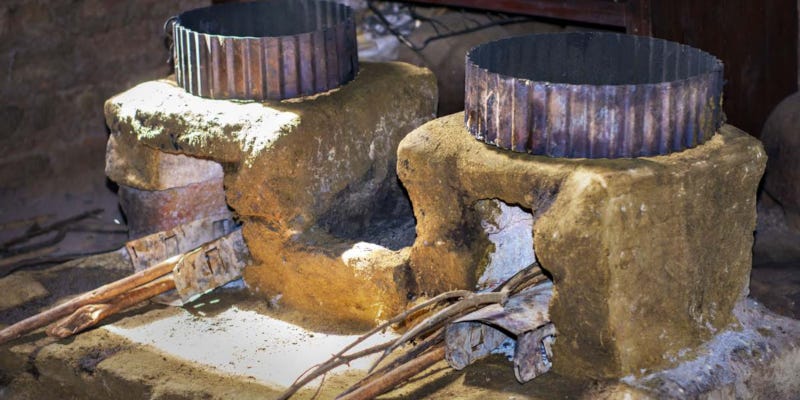
Community members say that almost none of the money from sales of carbon credits reached local households. They complain of broken stoves, lack of follow-up, and no grievance mechanism to raise concerns. Many of the villagers report that they cannot use the stoves any more.
“The stoves are not durable,” a villager says. “They can easily be broken down.”
Swedwatch writes that,
In Chimanimani, more than 1,000 households were left with half-built stoves and missing parts after C-Quest operations were abruptly halted amidst the fraud investigations and the agreement with the local implementation partner were terminated, leaving communities without any avenue to raise grievances about broken stoves, delayed installations, and lack of revenue-sharing.
Bridge Carbon
C-Quest has now filed for bankruptcy and its cookstove projects have been transferred to Bridge Carbon Limited, a company registered in the UK in August 2024.

Bridge Carbon tells Swedwatch that it is “legally and formally very much not linked” to C-Quest. Bridge Carbon says it did not gain financially from these projects. In July 2025, Bridge Carbon asked Verra to withdraw the project.
Bridge Carbon tells Swedwatch it has closed down the projects because of the market realities of the clean cooking sector and new government regulations in Zimbabwe. “Bridge Carbon does not have the financial resources to undo the fraud and restore projects from its predecessor company, C-Quest Capital,” Jules Kortenhorst, CEO of Bridge Carbon, tells Swedwatch.
A local government representative in Chimanimani says that,
“If we knew what we know now when the project was introduced, we would have negotiated better to ensure that there were some benefits that accrue to the community and that, as a local authority, we would have ensured that some of such resources would have remained at the local level to spur some development including starting some climate related projects that can further support the community.”
wow more corruption!!