

“Entire communities now live in fear and despair.” How the Tanzanian government profits from tourism while cracking down on Indigenous Peoples in Ruaha National Park
The World Bank’s failure to address breaches of its policies is “beyond shameful”.

Tanzania has a booming luxury safari industry. In 2025, the government met its target of 5 million tourists visiting the country. By 2030, the government aims to attract 8 million tourists every year.
The government is massively expanding the area of national parks in the country. But this conservation has a dark side. In the name of conservation, the Tanzanian government is running a campaign of violence and evictions against Indigenous Peoples.
The Oakland Institute has been documenting these human rights abuses and campaigning against them for more than a decade.
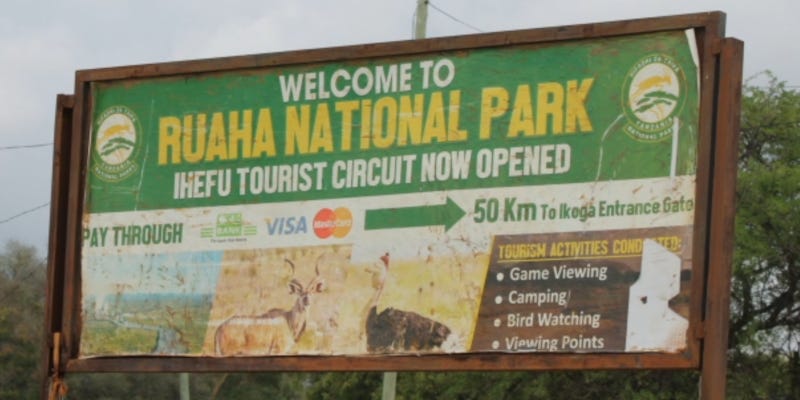
The Ruaha National Park in southern Tanzania is an example of the brutality of Tanzania’s government in its pursuit of profits from tourism.
In 2017, the World Bank started a project titled, Resilient Natural Resource Management for Tourism and Growth (REGROW) in Tanzania. This included financing for the doubling of the area of the Ruaha National Park — from 1 million to 2 million hectares. (The World Bank states that this expansion took place in 2008 and “was completely unrelated to the Project”.)
Living in fear and despair
After the area of the national park doubled, more than 84,000 people found themselves living inside a national park. They became trespassers on their own land, but were never consulted about the expansion of the park.
There was no process of free, prior and informed consent.
A short film produced by the Oakland Institute explains that,
The Bank’s US$100 million project equipped and enabled paramilitary park rangers, who started terrorising locals to force them away from their villages. Falsely labelled as poachers, dozens of young herders were killed or disappeared during the project. Rangers confiscated thousands of cattle, farmers were barred from cultivating their land. Government services were shut off and schools shuttered. Entire communities now live in fear and despair.
In 2023, the Oakland Institute filed a complaint with the World Bank’s Inspection Panel on behalf of two of the impacted villagers.

The Inspection Panel’s investigation report found that there were “critical failures of the Bank in the planning and supervision of this Project and that these have resulted in serious harm”.
In November 2024, Tanzania cancelled the REGROW project.
“Beyond shameful”
In April 2025, the Bank published a 70-page report that includes recommendations aimed at addressing the breaches of its policies and details a US$2.8 million project aimed at supporting alternative livelihoods for communities inside and around the park.
The Oakland Institute’s executive director, Anuradha Mittal, told The Guardian that the Bank’s response was “beyond shameful”.
“Suggesting that tens of thousands of people forced out of their land can survive with ‘alternative livelihoods’ such as clean cooking and microfinance is a slap in the face of the victims.”
Despite the Bank’s April 2025 Action Plan, “the situation remains dire on the ground,” the Oakland Institute states. “Families of those murdered during the project still await justice.”
Two more villagers were killed by national park rangers after the Bank’s Action Plan was released. Rangers have seized more than 1,000 cattle. Villagers are prohibited from farming their lands. Families are going hungry.
The Bank’s support for alternative livelihoods has not helped the victims. Mittal comments that,
“Despite the findings of the Inspection Panel, which led to the cancellation of the project and an Action Plan to redress devastation that the World Bank unleashed, impacted villagers — even today — cannot live on their lands and farm or graze their cattle without risking death at the hands of park rangers. The plan at best makes a mockery of the Bank’s so-called commitment to remedy harms its financing caused. Communities deserve justice and the Bank should be held accountable.”
In June 2025, 11 UN Special Rapporteurs warned the Bank that the alternative livelihood activities “do not seem to have been developed to directly respond to the shortcomings of the REGROW project”.
More evictions planned
In September 2025, Tanzania’s president Samia Suluhu Hassan announced that the government was moving ahead with evictions from Ruaha National Park.
Tanzania is becoming increasingly authoritarian. The presidential election in October 2025 saw protests across Tanzania and a brutal military and police response. Thousands of people were killed. Hassan won 98% of the vote after barring her main rivals from the election.
In 2025, the World Bank provided more than US$9.6 billion in loans and grants. The Bank is Tanzania’s largest donor.
“It has the power and leverage to ensure that villagers affected by its financing of the park’s expansion are protected and provided justice, reparations, and their land back,” the Oakland Institute states. “It is also the Bank’s duty under international law and its own operating procedures. And yet the Bank has chosen to remain silent and complicit.”
On 2 February 2026, the Oakland Institute submitted a complaint to the Bank’s Grievance Redress Service on behalf of villagers in Mbarali District. The villagers are anonymous because of fears of government reprisals.
Letter to the World Bank’s president
The Oakland Institute is encouraging people to send the letter below to the World Bank president, Ajay Banga. Please visit the Oakland Institute’s website to send the letter.
Subject: Justice for REGROW-Affected Communities in Tanzania
To: Ajay Banga, President, World Bank
CC: Maninder Gill, Global Director, Environmental and Social Framework, World Bank;
Amit Dar, Director of Strategy and Operations for Eastern and Southern Africa, World Bank;
Edith Jibunoh, Director, External Affairs, Eastern & Southern Africa, World Bank;
Coralie Gevers, Chief of Staff, Office of the President, World Bank.Dear Ajay Banga,
I am writing to urge the World Bank to take immediate action to remedy the grave harms caused by the Bank-financed REGROW tourism project in Tanzania.
Although REGROW was cancelled in 2024 after the Bank’s own Inspection Panel found “critical failures” that caused “serious harm,” more than 84,000 people continue to suffer killings, forced disappearances, human rights abuses, livelihood destruction, and displacement. Ten months after the Bank announced its April 2025 Action Plan, communities have received no meaningful relief: Bank-funded rangers have killed two more villagers, terror continues, and livelihood restrictions remain in place despite explicit assurances that farming and grazing would resume.
As Tanzania’s largest donor, the World Bank has the responsibility, leverage, and legal obligation to end this harm. I call on the Bank to take urgent action with the Tanzanian government to finally meet longstanding community demands by:
Respecting the 1998 boundaries of Ruaha National Park;
Halting all forced evictions and resettlement threats;
Suspending livelihood restrictions;
Resuming basic public services;
Providing comprehensive justice and reparations for victims of livelihood restrictions and ranger violence.
Continued inaction violates the Bank’s commitment to accountability and contravenes its mandate to fight poverty and uphold human rights. I urge you to act decisively and without further delay.