

Isangi REDD project: “Emissions reductions were likely short-lived if they occurred at all”
Verra has frozen the buffer pool carbon credits from the project.

A recent article by journalists Hanna Nikkanen and Jonas Gerding looks at “carbon neutral” claims and the carbon offsets bought in order to make these claims. Titled “Dead Sinks,” the article is published in Finnish by Long Play, which Nikkanen co-founded.
In November 2019, the Finnish food delivery company Wolt announced that its deliveries were carbon neutral. To achieve this Wolt relied mainly on carbon credits from three REDD projects: Kariba in Zimbabwe, Envira Amazônia in Brazil, and Isangi in the Democratic Republic of Congo.
In total, Wolt bought almost €1 million worth of carbon credits from South Pole.
This post looks at what Nikkanen and Gerding uncovered about the Isangi REDD project.
Isangi and the Blattners
The Isangi REDD project was part of two logging concessions run since 2004 by Société Africaine de Bois (Safbois). In 2009, the carbon rights to the forest were transferred to Jadora LLC, a US-based company.
Safbois is owned by Daniel Blattner, David Blattner, and James Blattner. They also control Jadora.
The Blattner family has a colourful history in the Democratic Republic of Congo.
In the 1980s, Elwyn Blattner started buying Belgian-owned companies and land — many of which had been seized by the dictator Mobutu Sese Seko. The Blattners now have built a business empire that included airlines, banks, mines, oil palm plantations, and construction firms.
Nikkanen and Gerding write that,
The family’s approach to business has often been ruthless. Elwyn Blattner and his brothers have been accused of misappropriating public funds and circumventing laws through complex corporate structures.
Elwyn’s brother David Blattner was convicted in 2021 of embezzling state funds as part of a major corruption network. He was sentenced to 20 years of hard labor but reportedly fled to Belgium before the verdict was announced. (An irate accomplice told the press that millions in bribes smoothed Blattner’s escape.)
Broken promises
When the Isangi REDD project started, Jadora and Safbois promised to help the communities living in the project area. The support measures were listed in a 34-page document.
Jadora and Safbois promised to help villagers develop new livelihoods involving fish farming, caterpillar farms, cacao cultivation, and bee keeping. They would teach villagers how to get microloans and cultivate medicinal plants.
Safbois and Jadora promised to build schools in 24 villages. Teachers would be paid a proper salary.
But the promised support didn’t arrive. Safbois and Jadora started some construction projects but left them unfinished.
In 2019, villagers signed an agreement with Jadora and Safbois — five years after the project was certified by Verra.
The first carbon credits were sold in 2015. The project sold a total of 1,391,623 carbon credits. The Blattners earned millions from the sale of carbon credits.
Villagers complain that they still don’t know anything about carbon credits. “The wealth generated by the carbon trade is scarcely visible in the villages,” Nikkanen and Gerding write.
“Almost half of Tshopo’s children suffer from malnutrition, and a cholera outbreak swept the area a few months ago,” Nikkanen and Gerding report. “There is no electricity or running water.”
André Boena, a village leader, tells Nikkanen and Gerding that Jadora built fish ponds but did not help villagers find markets for the fish. The ponds are now abandoned.
In January 2024, the Ministry for Environment and Sustainable Development cancelled eight conservation concessions, including Isangi. Verra removed the project from its registry two months later.
Verra’s response to Long Play
Verra declined to be interviewed by Long Play. Instead Verra sent comments about the Isangi REDD project by email. Between 2009 and 2013, auditors reported that “local residents were dissatisfied with how the project’s benefits were distributed,” Nikkanen and Gerding write.
“At that time, the project appeared to be on the right track, and positive effects were expected to be seen in subsequent inspections,” Verra commented. “If communities did not receive the benefits they expected, it is deeply regrettable.”
But the monitoring report carried out by Rainforest Alliance for the period 2009 to 2013 is the only monitoring report ever produced for the Isangi REDD project. At that point no carbon credits had been sold.
All the carbon credits sold from the project were generated between 2009 and 2013. No carbon credits have been sold from the project since 5 February 2021.
Verra explained to Nikkanen and Gerding that Verra’s role is to ensure that the carbon credits sold from projects on its registry are genuine. This is an extraordinary claim given Verra’s repeated failure to ensure that the vast majority of its credits are genuine.
“Carbon credits were created only when we had evidence that deforestation could genuinely be avoided,” Verra told Long Play.
The village of Yafunga used to be surrounded by rainforest. When Nikkanen and Gerding visited they found that the forest around the village has been replaced by fields. Some families earn money from palm oil plantations.
Long Play analysed satellite images for the period 2003 to 2024 of the Isangi REDD project area to check Verra’s claim of avoided deforestation. “Emissions reductions were likely short-lived if they occurred at all,” Nikkanen and Gerding write. “In fact, deforestation in the Safbois-managed area accelerated rapidly over the past decade.”
Long Play found that before 2009 logging in the Isangi project area was about two square kilometres per year. It remained about the same after the REDD project started. In 2013, logging rates increased to 10 km². Then 20 km². The satellite images suggest that this was mainly due to land clearing.
Villagers lost jobs after the REDD project started. They started clearing land when Safbois and Jadora’s promises of new livelihoods came to nothing.
In September 2025, Verra froze the 308,284 carbon credits that the Isangi REDD project had placed in Verra’s buffer pool as insurance against deforestation increasing in the project area.
The Blattners’ new REDD venture
Brandon, Daniel, and David Blattner, meanwhile, have moved on to a new REDD project called the Tshopo Lomami REDD project.
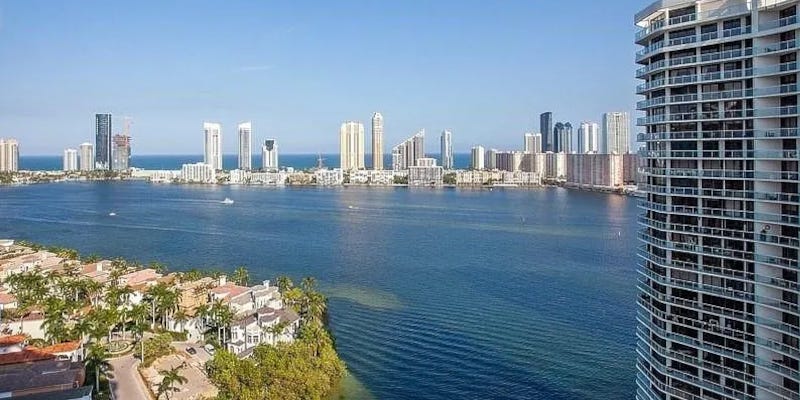
After fleeing to Belgium in 2021 to avoid his 20-year hard labour sentence for embezzlement, David Blattner moved to a luxurious US$2.5 million waterfront apartment in Miami.
The three companies involved in the Tshopo Lomami REDD project, Renewable Solutions, Inc., Green Initiatives, Inc., and Biodiversity Developments, Inc. are all registered at David Blattner’s Miami apartment.
Verra is currently considering whether to validate the Blattner’s latest REDD project.
And Wolt has stopped buying carbon credits. On its website, the company explains that,
While in the past, we used to purchase carbon avoidance offsets to make our deliveries carbon neutral, we have decided that the best thing that we can do is to reinvest all of those funds into actually reducing our emissions in the first place.
It is refreshing to learn that there are businesses like Wolt that would actually learn from past mistakes and take actions to achieve real emission reductions. That gives us hope.