


Indigenous peoples have the right to a process of free, prior and informed consent before they decide whether or not a REDD project should be implemented on their territory. This principle is enshrined in the UN Declaration on the Rights of Indigenous Peoples.
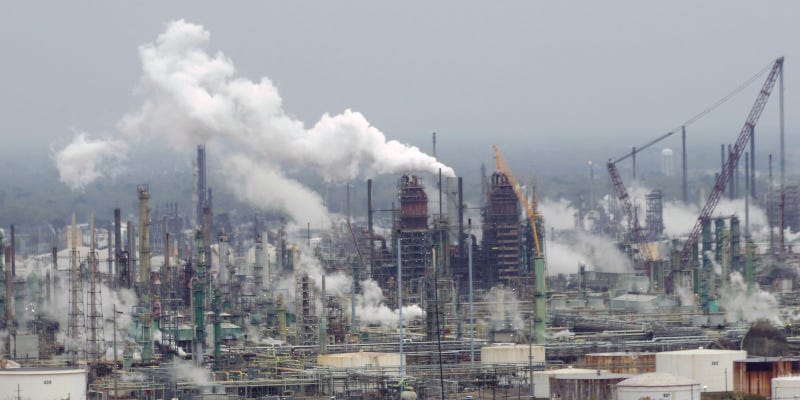
But if REDD is a carbon trading mechanism, the emissions avoided in the forest will be transferred to the Global North, where an equivalent amount of emissions will continue. The right to free, prior and informed consent must therefore also apply to indigenous communities facing continued pollution of their environments from oil and gas extraction, oil refineries, coal-fired power plants and oil spills.
At a press conference at the UN Permanent Forum on Indigenous Issues in New York this week, Joan Carling of Asia Indigenous Peoples Pact explained her view of REDD and how indigenous peoples should decide for themselves their views about REDD. Her view is biased both in favour of forest dependent indigenous peoples and in favour of carbon trading.
Carling believes that when indigenous peoples oppose REDD it’s the result of NGOs “imposing their ideology”, yet where indigenous peoples support REDD, no NGOs and no ideology are involved.
Her comment was a response to a question by Matthew Russell Lee, a journalist with Inner City Press. A video of the press conference is available here – Lee’s question comes at 11:41.
In his question, Lee explained that he’d heard a lot of complaints about REDD from people during the forum, because it doesn’t include the principle of free, prior and informed consent. He added that in Panama and other countries indigenous peoples are actually opposing REDD.
Carling’s response to the question is posted here in full:
First of all let me just introduce, state that I’ve been engaged with the international negotiations particularly of REDD+ and we acknowledge the support of the Mexican government, where the Cancun Agreement on REDD was adopted, which includes safeguards, social and environmental safeguards, and this is consistent with what the indigenous peoples have demanded as part of REDD.
I am aware of the controversies of REDD as viewed by different indigenous organisations and we, my organisation, the Asia Indigenous Peoples Pact, respect the position of different indigenous peoples.
However, I want to state that the position should be made clearly by forest dependent indigenous communities and not other groups making the decision for them. Because we also notice that a lot of NGOs are also working, so called working, closely with indigenous peoples but are imposing their ideological views. And yet at the end of the day, what happens to the forests will affect the lives of indigenous peoples.
Now let me cite an example of how this is being regarded on the ground. In the case of Cambodia, where the forest is being given away to economic land concessions left and right, and so the indigenous leaders had asked, “If REDD is going to stop the concessions, the government from giving away our land to concessionaires, or to rubber plantations, then we’d rather go for REDD, than anything else, because with REDD, if REDD will assure that our forests will remain standing and that we will be able to do our livelihoods, then that is the way for us to go.”
So that demonstrates the kind of view on the ground of quite a number of indigenous communities, where what matters is that their rights, their sustainable livelihoods, their dignity, their welfare, are protected with REDD, or any other projects that come into the territories of indigenous people.
I think that the basic framework where we are operating and where we respect the views of those who are against it because it does not serve their interests or it violates their rights or those who are for REDD because it protects their rights and that is determined by the circumstances they are in.
Comments following the original post on REDD-Monitor.org are archived here: https://archive.is/Qn7Vb#selection-1141.4-1141.14