

Merlin Thompson jailed for two years for selling fake carbon credits under Oregon’s carbon credit programme
Three electric vehicle chargers supposedly generated the carbon credits that Thompson sold for US$1.8 million.

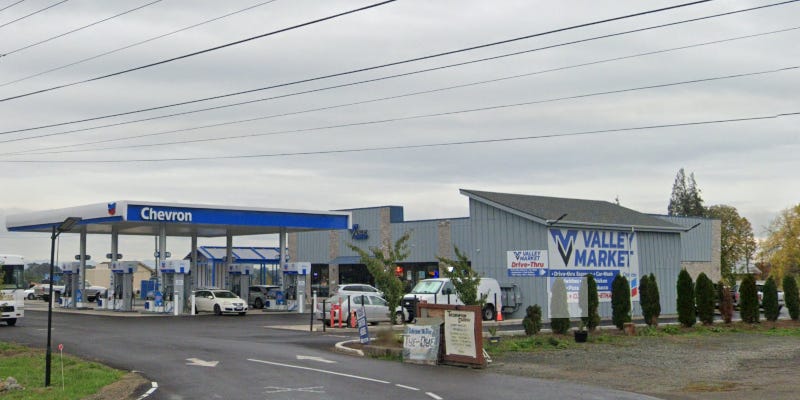
On 6 August 2025, Merlin Thompson has been sentenced to two years in prison after fraudulently selling carbon credits for US$1.8 million under Oregon’s Clean Fuels Program. Thompson pleaded guilty to racketeering, tax evasion, and first degree theft.
The scam started on 14 June 2021, when Thompson’s company, Thompson Technical Services, registered with Oregon’s Department of Environmental Quality. The company stated that it owned three electric vehicle chargers and applied to generate carbon credits under Oregon’s Clean Fuels Program.
On 29 December 2021, the Department of Environmental Quality approved the application.
The carbon broker
Thompson Technical Services hired Danny Takhar, a carbon credit broker who runs a company based in Vancouver, British Colombia, called Climate Carbon. On its website, Climate Carbon claims that,
Climate Carbon provides carbon offsets from a diversified portfolio of high-quality carbon projects in Canada and worldwide, all of which are certified according to globally recognized criteria and standards.
Thompson Technical Services told Climate Carbon that they had 12,000 carbon credits to sell and in May 2022, Takhar arranged for the sale of the credits to a company called Elbow River Marketing Ltd.
Takhar told Alex Baumhardt, a journalist with Oregon Capital Chronicle, that he thought Thompson Technical Services was earning the credits legally. Takhar was supposed to get US$226,000 for setting up the deal. But Thompson didn’t pay. “The excuses piled up,” he told Baumhardt.
The fossil fuel company
Elbow River Marketing is a Canadian company that transports crude oil, liquid petroleum gas, petrol, diesel and other fossil fuel products. A subsidiary, Elbow River Marketing USA, which is incorporated in the tax and secrecy haven of Delaware, imports fossil fuels to Oregon.
Fossil fuel importers like Elbow River are required under Oregon law to lower the carbon intensity of the petrol and diesel that they import into the state. But they can buy carbon credits — which supposedly contribute to their emissions reductions.
The carbon credits were sold at US$112 each. The 12,000 carbon credits would cost more than US$1.3 million.
The payment agreement included Thompson’s confirmation that,
each CFP Credit transferred to Buyer hereunder is valid as contemplated by the Oregon Clean Fuels Program Regulations and is, indefeasible, a ‘Credit’ as defined by the Oregon Clean Fuels Program Regulations.
On 10 June 2022, Thompson Technical Services reported to the Department of Environmental Quality that the three EV chargers had supplied 14.9 million kilowatt hours of electricity in the first quarter of the year.
On 24 June 2022, Thompson sent an email to Elbow River stating that his company had 16,000 credits available for sale. Elbow River agreed to buy an additional 4,000 credits for US$111 each.
On 26 June 2022, Thompson Technical Services submitted forms with the Department of Environmental Quality for the transfer of the 16,000 credits.
On 4 July 2022, Elbow River transferred almost US$1.8 million to Thompson Technical Services for the credits.
After receiving the money from Elbow River, Thompson went on a spending spree. He bought motorbikes and cars and took a holiday in Hawaii. But his employees went unpaid. As did Tellus, the company that sold Thompson the EV chargers. Thompson bought a total of nine EV chargers on credit from Tellus. The company was owed about US$400,000.
On 19 July 2022, Elbow River agreed to buy a further 36,000 credits for a total of US$3.6 million. These credits were, according to Thompson Technical Services, generated by two of the three EV chargers in the second quarter of 2022 during which time they supplied 30 million kWh of electricity.
The credits were to be delivered by 25 August 2022.
Broker turns whistleblower
In early August 2022, the broker in Canada, Danny Takhar, sent an email to Bill Peters, an analyst at the Department of Environmental Quality. “We think he may have spent funds on personal items instead of business,” Takhar wrote. He asked the agency to put on hold Thompson’s credits from the second quarter of 2022.
“I do not want this to go any further. Significant dollar amount is involved,” Takhar wrote.
Following Takhar’s email, an employee of the Department of Environmental Quality travelled to a Valley Market convenience store on Highway 18, outside Sheridan. The EV chargers were behind the Valley Market store.
“All were wrapped in plastic shrink wrap and did not appear to be connected to any power supply,” they reported.

On 12 August 2022, the Department of Environmental Quality told Elbow River that it was imposing an interim suspension on Thompson Technical Services’ Clean Fuels Program account. The 16,000 credits in Elbow River’s account would be put on “immediate administrative hold”.
Lies and more lies
In fact, Thompson’s EV chargers were only delivered in April 2022. So in the first quarter of 2022, they cannot possibly have charged any cars, or generated any carbon credits.
Even if they had been installed and plugged in, the reported amount of electricity is far more than the thee EV chargers could have supplied even if they were charging vehicles 24 hours a day.
On 30 September 2022, Kieran O'Donnell, Manager of the Office of Compliance and Enforcement at the Department of Environmental Quality wrote to Thompson informing him that the Department has issued a penalty of US$2.7 million “for violations of the Oregon Clean Fuels Program rules”.
That’s the largest fine ever imposed by the Department of Environmental Quality. Thompson Technical Services was also ordered to buy valid credits to replace the fake credits that he’d sold to Elbow River. Thompson appealed.
Thompson also lied about which energy company theoretically supplied the electricity to the EV chargers. Thompson claimed that the electricity was supplied by Consumers Power, Inc.
But Consumers Power does not supply electricity to Sheridan. Portland General Electric supplies electricity to Sheridan. And Portland General Electric emits far more carbon to generate electricity that Consumers Power does.
Consumers Power’s electricity has a carbon intensity of 16.77 grams of carbon dioxide equivalent per megajoule of energy. Portland General Electric’s carbon intensity score is 146.02. That would have reduced the the number of carbon credits that Thompson Technical Services generated from 16,000 to just over 9,100.
Except that since the EV chargers were never plugged in, the actual number of carbon credits generated cannot possibly be anything more than zero.
In October 2022, Thompson told OregonLive that he had misunderstood how the carbon credit system worked. “I’m not trying to purposely defraud anybody. All I want to do is get these charging stations out there,” Thompson said. “I’ll do whatever we need to do to make it right.”
Thompson has now been ordered to pay back the entire sum. The judge ordered him to repay at a rate of US$50 per month because he could not afford to pay more. At that rate, he’ll have finished the payments in 3,000 years’ time.
Lauren Wirtis, Department of Environmental Quality’s spokesperson, told OregonLive that the agency now scrutinises new participants in the Clean Fuels Program more carefully, and it has capped the number of carbon credits that can be issued for one EV charger per quarter.
She told OregonLive that,
“The agency has done several rounds of reviewing all the electricity reporting in the last three years to search for other anomalous reporting. Those reviews have turned up reporting errors but no similar cases of fraud.”
$50 per month is crazy. That’s less than a normal utility bill. Why can’t he sell back all the shit he bought?
If we jailed everyone who sold fake carbon credits, wouldn’t the jails fill up?