

Verra has reinstated the Northern Kenya Grassland Carbon project despite an ongoing court case and accusations from Indigenous Peoples of “tricks and dishonest dealings”
“Because if we sign the document without understanding what is inside, it will be like we have agreed to give away our land.”

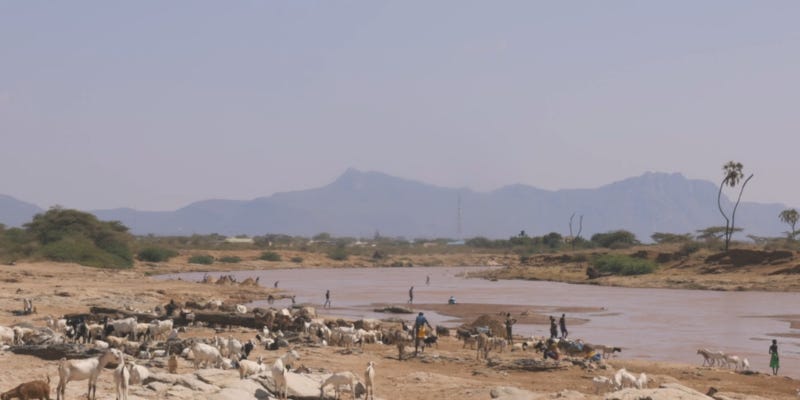
The Northern Kenya Grassland Carbon project is “the world’s largest soil carbon removal project” according to Northern Rangelands Trust, the organisation running the project.
It is also one of the most controversial carbon projects anywhere in the world. The carbon certifying company Verra has suspended the project twice, first in 2023, and again in 2025.
Last week, Verra reinstated the project despite a 2025 court ruling that two of Northern Rangelands Trust’s largest conservancies had been established unconstitutionally. The court ruled that the conservancies had no basis in law.
In a statement about Verra’s decision to reinstate the project, Survival International writes that one of these conservancies, Biliqo Bulesa, contributes about 20% of the carbon credits generated by the project. “The court ruling could potentially be applied to half of the other conservancies involved,” Survival International notes.
Survival International’s response to Verra’s decision to reinstate the project is posted in full below.
“Tricks and dishonest dealings”
Last week, Survival International put out a press release stating that “Indigenous people reject attempts to re-start troubled carbon credit project.” The project severely restricts the traditional grazing practices of Indigenous Peoples.
Indigenous people accuse Northern Rangelands Trust of “tricks and dishonest dealings”.
Maasai and Rendille people living in the Leparua and Melako conservancies told Survival International that Northern Rangelands Trust is coercing them into signing agreements.
These agreements could reduce community control over their ability to graze their livestock and to manage their own lands. Survival International has seen drafts of the agreements, which “introduce stricter obligations on Indigenous herders, expand the number of parties involved in decision-making and allocate a significant share of future carbon revenues to local county authorities. This could create new conflict over land use and revenues, while further weakening Indigenous peoples ability to manage their own lands.”
Survival International quotes Jackson Lokadelio of Leparua Conservancy who says that,
“As the Leparua Conservancy community, we do not understand this NRT carbon project agreement. We also cannot accept being called just to sign a document without knowing what is inside it. . . .
“Because if we sign the document without understanding what is inside, it will be like we have agreed to give away our land. I also ask everyone not to be misled by money.”
Northern Rangelands Trust has sold more than 6 million carbon credits. The Wall Street Journal estimates that the project has raised between US$42 million and US$90 million from sales of carbon credits, depending on market prices. Meta and Netflix are among the companies that have bought carbon credits from the Northern Kenya Grassland Carbon project.
But the project was set up without the free, prior and informed consent of Indigenous peoples living in the project area. “Without their free, prior and informed consent, there is no legal basis for the carbon project,” Survival International notes.
Controversial carbon credits scheme in Kenya re-certified by Verra for the second time — Survival International response
Survival International, 22 June 2026
Last week, the carbon credits certifier Verra reinstated for the second time a hugely controversial carbon credit scheme in Kenya led by the Northern Rangelands Trust (NRT), despite a court ruling from 2025 that two of the largest conservancies set up by NRT had been established unconstitutionally, with no basis in law.
One of these, Biliqo Bulesa, contributes about 20 percent of the carbon credits to the project. The court ruling could potentially be applied to half of the other conservancies involved.
Despite the enormous question mark this ruling raises over NRT’s entire operation, Verra decided last week to reinstate the whole 2-million-hectare project on the basis of a “ratification” process carried out in just one community — without even waiting for the final outcome of the court case, which NRT has appealed and which is still ongoing. This is not only absurd, but potentially damaging for the rights of Indigenous peoples everywhere.
The supposed ‘ratification’ project claimed to secure communities’ FPIC — free, prior and informed consent. But that has to come before a project starts, not be bolted on 14 years later, once a court has ruled the whole thing was built on illegal land grabs. NRT and Verra are not simply patching up a paperwork error; they are trying to retroactively legitimize a project that should never have existed in the first place.
If other communities still say no, what then? Will Verra finally scrap the project — or just keep looking for new ways to get to “yes”?
This is the real scandal: under Verra’s rules, you can sell carbon credits derived from violations of Indigenous peoples’ rights under international law, let companies like Meta and Netflix buy and trade them for years, and then – once you’re caught – simply fix the paperwork retroactively and carry on as if nothing happened.
That’s not integrity, that’s impunity. And it’s a warning for every company still buying Verra credits, anywhere: if this is what “compliance” looks like, the whole system is little more than a rubber stamp for greenwashing abuses against Indigenous peoples.
The project is currently being restructured in an attempt to make it consistent with Kenya’s laws — raising the question as to how it was ever authorised under Verra’s system, and how it issued millions of credits when it was clearly not compliant with Kenyan law – and in order to obtain communities’ FPIC. Survival has learnt that this is being strongly resisted by some communities, and is far from over. Verra’s decision to reinstate the project has completely pre-empted this process.