

What the new World Bank President should do on REDD

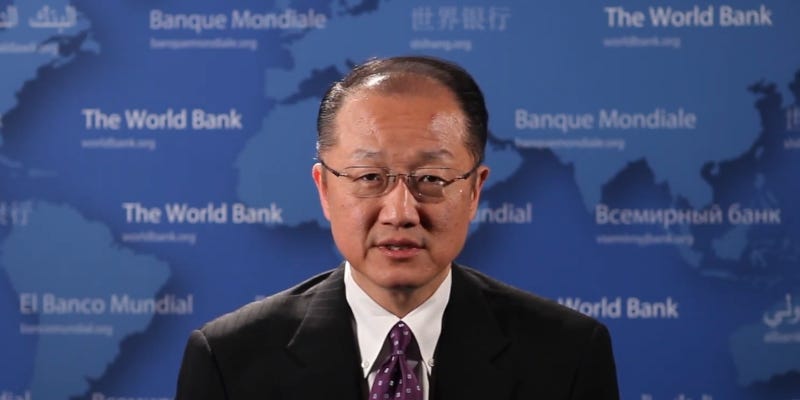
Earlier this week, the World Bank’s Executive Directors chose a new president. For the 12th time in its history, the World Bank will have a US citizen as its president. No surprises there, then.
But the choice of Jim Yong Kim could bring some surprises at the World Bank. Mark Weisbrot of the Center for Economic and Policy Research told BBC News that, “There’s just no comparison between him and any of the prior World Bank presidents.”
“The others were political insiders. They spent most of their lives getting rich or becoming politically powerful, or worse. Kim, by contrast, has spent most of his life trying to improve the lives of poor people.”
In 1987, Kim co-founded Partners in Health, a non-profit organisation that provides health care to poor communities. In 2000, he co-edited a book titled, “Dying for Growth”. When Kim takes up his new job in July 2012, he will be the first World Bank President to have written something that Noam Chomsky described as “poignant, vivid, and highly informative” and “a thoughtful and compelling call to action”.
Jim Yong Kim has said that he will “seek a new alignment of the World Bank Group” to prioritise “evidence-based solutions over ideology”. In an interview with the BBC, he said that the World Bank “has to think about how it can engage in problems such as climate change”. The first test of whether Kim is serious about this will be whether he signs off on a World Bank loan for a huge coal-fired power plant in Kosovo.
Then, there’s the Bank’s role in REDD.
Kim is currently President of Dartmouth College. He could do worse than read the analysis produced in December 2010 by the Climate Justice Research Project at Dartmouth College. It’s a top ten list of what’s wrong with REDD, particularly the market-based variety.
The World Bank’s REDD programme is currently based on ideology over evidence-based solutions. It’s based on REDD as a carbon trading mechanism. The World Bank employs 200 staff working on carbon markets.
As REDD-Monitor has explained repeatedly, carbon offsets do not reduce emissions, they just move them from one place to another. Offsets are also inequitable since the reduction in emissions is counted where the carbon credits are bought, not where they are sold. If Indonesia succeeds in reducing deforestation but finances this through REDD credits, the reduction will not count against the 41% reduction against business as usual that President Susilo Bambang Yudhoyono has promised. If it did, the reduction would be double counted.
So here’s a suggestion for Jim Yong Kim when he takes up his new job in July 2012. Suspend the Forest Carbon Partnership Facility, and instigate a thorough review of all the Bank’s REDD activities, to ensure that Kim’s new organisation’s promotion of REDD is not going to make matters worse for the world’s poor, as his previous organisation suggested it might.
But if Kim plans to retreat from his previously stated anti-neoliberal position (and there are already signs that he may well do so), a better suggestion comes from Patrick Bond. Rather than legitimising a destructive institution, he should tender his resignation immediately.
Comments following the original post on REDD-Monitor.org are archived here: https://archive.ph/Ts7Nu#selection-933.4-933.14