


There are many reasons not to buy voluntary carbon credits as an investment. The price is likely to fall over time. There is no secondary market. And you’re more than likely to be ripped off when you buy carbon credits.
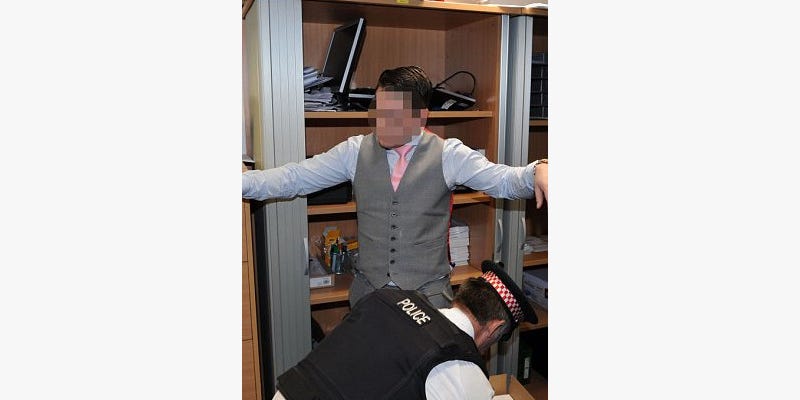
The sums of money involved are large. Recently, two people in the UK were jailed after defrauding people out of £6 million for carbon credits. MH Carbon, which is in liquidation, sold carbon credits to more than 5,000 people, at a total cost of £18.7 million. World Future, also in liquidation, scammed £2.5 million from the public for what the Insolvency Service described as “near worthless carbon credits”. Another company in liquidation, Hildon Green Energy Markets, raised at least £3 million from sales of carbon credits.
This is only the tip of the iceberg. Over the last few weeks, I’ve noted down the names of similar companies – there are currently around 50 companies on the list. And even this is only the tip of the iceberg.
Many of the companies that sell carbon credits as “investments” use the fact that the carbon credits they are selling are certified to the Verified Carbon Standard (VCS) to prove that they are genuine and valuable. For example, on its website, MH Carbon quotes from a VCS press release to answer the question, “Why MH-Carbon uses VCS standard credits”:
VCS was founded to provide a robust quality assurance standard that projects could use to quantify greenhouse gas emissions and issue credits in voluntary markets. From its early days, VCS has grown into a comprehensive GHG program that is steadily evolving in response to market needs.
VCS has a mission statement that explains (among other things) that VCS provides “a trusted, robust and user-friendly program that brings quality assurance to voluntary carbon markets”. Which is just the kind of statement that a carbon credit boiler room operation would want to reassure a potential buyer of carbon credits.
VCS even has a page on its website titled, “Where can I buy VCUs [Verified Carbon Unit]?” VCS explains that, “VCUs can be bought directly from projects, carbon aggregators, retailers or exchanges.” However, VCS provides no warning about the risks of being ripped off if you buy VCS carbon credits, instead declining to provide any advice at all, “VCS is not an investment firm, and as such, does not provide any direct advice on the purchase or trading of VCUs.”
Given the scale of the carbon credit boiler room scam, this seems grossly irresponsible. APX, one of the registries for VCS carbon credits, has the following statement on its website:
Should I invest in VCUs?
Unlike instruments approved for use in compulsory carbon cap and trade programs, no entities are required to purchase and retire voluntary carbon offsets. Entities that voluntarily seek to offset their GHG emissions footprint (such as corporations, governments and individuals), project developers, traders and investors are active participants in the VCU market. Therefore, there is little ability to accurately forecast demand and supply in the voluntary carbon offset space. As a result, APX strongly believes that VCUs are not suited for individuals to target as a short, medium or long-term investment. Our view is shared by the UK Financial Services Authority as well as the International Carbon Reduction and Offset Alliance.
REDD-Monitor has written to VCS, suggesting that VCS should post this or a similar warning on its website – with a link from the VCS home page.
Comments following the original post on REDD-Monitor.org are archived here: https://archive.is/JVNRt#selection-1197.4-1197.15