


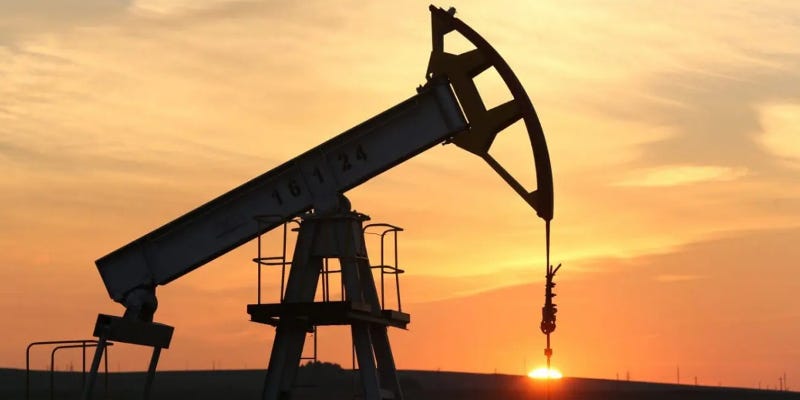
For REDD to work we need to address climate change, otherwise the forests will go up in smoke. To address climate change we need to leave fossil fuels in the ground. So why isn’t this on the UNFCCC agenda in Doha?
“A 4°C world can, and must, be avoided,” Dr Jim Yong Kim, the President of the World Bank, wrote just before COP18 started in Doha. And he noted that the current pledges under the UNFCCC would result in between 3.5 and 4°C warming.
Jim Yong Kim’s comments are from the foreword to a World Bank report: “Turn Down the Heat: Why a 4°C Warmer World Must be Avoided”. The report, written by a team from the Potsdam Institute for Climate Impact Research and Climate Analytics, paints a grim picture of what 4°C warming would mean: rising sea levels, ocean acidification, heat extremes, lower agricultural yields, water shortages, increased fires and an increasing risk of triggering nonlinear tipping elements (one of which being Amazon die-back).
The report does not offer solutions, but states,
The projected 4°C warming simply must not be allowed to occur – the heat must be turned down. Only early, cooperative, international actions can make that happen.
And that’s it: “Early, cooperative, international actions.” Presumably we’re supposed to forget that the 20 years since the UNFCCC was formed have been characterised by interminable delays, divisive negotiations and an almost complete lack of international action on reducing global emissions. As this graph illustrates, emissions just keep going up and up (source: Netherlands Environmental Assessment Agency – click on the image to go to NEAA’s website):

Of course, the Bank isn’t about to start looking into its loans for coal-fired power plants. As Bill McKibben, Nnimmo Bassey and Pablo Solon point out (and as George Monbiot pointed out five years ago during COP13 in Bali) the solution to is to leave fossil fuels in the ground. To address climate change, we have to stop burning fossil fuels. If we keep digging them out, we will keep burning them. Unfortunately, this is not on the UNFCCC’s agenda in Doha.
So when Jim Yong Kim tells us that “The World Bank Group will step up to the challenge,” we know he’s lying – unless the Bank suddenly starts producing proposals for leaving fossil fuels in the ground.
The World Bank’s report also puts REDD in perspective by summarising the science on what a 4°C world would mean for the world’s forests. The impacts, particularly in the Amazon are predicted to be extremely serious:
Ecosystems will be affected by more frequent extreme weather events, such as forest loss due to droughts and wildfire exacerbated by land use and agricultural expansion. In Amazonia, forest fires could as much as double by 2050 with warming of approximately 1.5°C to 2°C above preindustrial levels. Changes would be expected to be even more severe in a 4°C world.
Unless we stop burning fossil fuels, forests are not going to continue storing carbon. While we still urgently need to protect the world’s forests, the negotiations at COP18 on REDD make no sense whatsoever in the absence of negotiations about how we are going to stop digging out fossil fuels and exploring for new reserves of fossil fuels.
The following are extracts from the World Bank’s report relating to the impact of a 4°C world on forests:
Ecosystems will be affected by the increased occurrence of extremes such as forest loss resulting from droughts and wildfire exacerbated by land use and agricultural expansion (Fischlin et al., 2007).
[T]here is a clear risk of large-scale forest dieback in the boreal-temperate system because of heat and drought (Heyder et al., 2011). Heat and drought related die-back has already been observed in substantial areas of North American boreal forests (Allen et al., 2010), characteristic of vulnerability to heat and drought stress leading to increased mortality at the trailing edge of boreal forests. The vulnerability of transition zones between boreal and temperate forests, as well as between boreal forests and polar/tundra biomes, is corroborated by studies of changes in plant functional richness with climate change (Reu et al., 2011), as well as analyses using multiple dynamic global vegetation models (Gonzalez et al., 2010). Subtle changes within forest types also pose a great risk to biodiversity as different plant types gain dominance (Scholze et al., 2006).
Humid tropical forests also show increasing risk of major climate induced losses. At 4°C warming above pre-industrial levels, the land extent of humid tropical forest, characterized by tree species diversity and biomass density, is expected to contract to approximately 25 percent of its original size [see Figure 3 in (Zelazowski et al., 2011)], while at 2°C warming, more than 75 percent of the original land can likely be preserved. For these ecosystems, water availability is the dominant determinant of climate suitability (Zelazowski et al., 2011). In general, Asia is substantially less at risk of forest loss than the tropical Americas. However, even at 2°C, the forest in the Indochina peninsula will be at risk of die-back. At 4°C, the area of concern grows to include central Sumatra, Sulawesi, India and the Philippines, where up to 30 percent of the total humid tropical forest niche could be threatened by forest retreat (Zelazowski et al., 2011).
A decrease in precipitation over the Amazon forests may therefore result in forest retreat or transition into a low biomass forest (Malhi et al., 2009). Moderating this risk is a possible increase in ecosystem water use efficiency with increasing CO₂ concentrations is accounted for, more than 90 percent of the original humid tropical forest niche in Amazonia is likely to be preserved in the 2°C case, compared to just under half in the 4°C warming case (see Figure 5 in Zelazowski et al., 2011) (Cook, Zeng, and Yoon, 2012; Salazar & Nobre, 2010).
Recent work has analyzed a number of these factors and their uncertainties and finds that the risk of major loss of forest due to climate is more likely to be regional than Amazon basin-wide, with the eastern and southeastern Amazon being most at risk (Zelazowski et al., 2011). Salazar and Nobre (2010) estimates a transition from tropical forests to seasonal forest or savanna in the eastern Amazon could occur at warming at warming of 2.5–3.5°C when CO₂ fertilization is not considered and 4.5–5.5°C when it is considered. It is important to note, as Salazar and Nobre (2010) point out, that the effects of deforestation and increased fire risk interact with the climate change and are likely to accelerate a transition from tropical forests to drier ecosystems.
Increased CO₂ concentration may also lead to increased plant water efficiency (Ainsworth and Long, 2005), lowering the risk of plant die-back, and resulting in vegetation expansion in many regions, such as the Congo basin, West Africa and Madagascar (Zelazowski et al., 2011), in addition to some dry-land ecosystems (Heyder et al., 2011). The impact of CO₂ induced ‘greening’ would, however, negatively affect biodiversity in many ecosystems. In particular encroachment of woody plants into grasslands and savannahs in North American grassland and savanna communities could lead to a decline of up to 45 percent in species richness ((Ratajczak and Nippert, 2012) and loss of specialist savanna plant species in southern Africa (Parr, Gray, and Bond, 2012).
By the end of the 21st century, global mangrove cover is projected to experience a significant decline because of heat stress and sea-level rise (Alongi, 2008; Beaumont et al., 2011). In fact, it has been estimated that under the A1B emissions scenario (3.5°C relative to pre-industrial levels) mangroves would need to geographically move on average about 1 km/year to remain in suitable climate zones (Loarie et al., 2009). The most vulnerable mangrove forests are those occupying low-relief islands such as small islands in the Pacific where sea-level rise is a dominant factor. Where rivers are lacking and/ or land is subsiding, vulnerability is also high. With mangrove losses resulting from deforestation presently at 1 to 2 percent per annum (Beaumont et al., 2011), climate change may not be the biggest immediate threat to the future of mangroves. However if conservation efforts are successful in the longer term climate change may become a determining issue (Beaumont et al., 2011).
Amazon Rain Forest Die-back
There is a significant risk that the rain forest covering large areas of the Amazon basin will be lost as a result of an abrupt transition in climate toward much drier conditions and a related change in the vegetation system. Once the collapse occurs, conditions would likely prevent rain forest from re-establishing. The tipping point for this simulation is estimated to be near 3–5°C global warming (Lenton et al. 2008; Malhi et al. 2009; Salazar and Nobre 2010). A collapse would have devastating consequences for biodiversity, the livelihoods of indigenous people, Amazon basin hydrology and water security, nutrient cycling, and other ecosystem services. Continuing deforestation in the region enhances the risks of reductions in rainfall and warming (Malhi et al. 2009) and exacerbates climate change induced risks.
References
Ainsworth, E.A., & Long, S. P. (2005). What have we learned from 15 years of free-air CO₂ enrichment (FACE)? A meta-analytic review of the responses of photosynthesis, canopy properties and plant production to rising CO₂. The New Phytologist, 165(2), 351–71. doi:10.1111/j.1469–8137.2004.01224.x
Allen, C. D., Macalady, A. K., Chenchouni, H., Bachelet, D., McDowell, N., Vennetier, M., Kitzberger, T., et al. (2010). A global overview of drought and heat-induced tree mortality reveals emerging climate change risks for forests. Forest Ecology and Management, 259(4), 660–684. doi:10.1016/j.foreco.2009.09.001
Alongi, D. M. (2008). Mangrove forests: Resilience, protection from tsunamis, and responses to global climate change. Estuarine, Coastal and Shelf Science, 76(1), 1–13. doi:10.1016/j.ecss.2007.08.024
Beaumont, L. J., Pitman, A., Perkins, S., Zimmermann, N. E., Yoccoz, N. G., & Thuiller, W. (2011). Impacts of climate change on the world’s most exceptional ecoregions. Proceedings of the National Academy of Sciences of the United States of America, 108(6), 2306–11. doi:10.1073/pnas.1007217108
Cook, B., Zeng, N., & Yoon, J.-H. (2012). Will Amazonia Dry Out? Magnitude and Causes of Change from IPCC Climate Model
Projections. Earth Interactions, 16(3), 1–27. Retrieved from http://adsabs.harvard.edu/abs/2012EaInt..16c…1CFischlin, A., Midgley, G. F., Price, G. T., Leemans, R., Gopal, B., Turley, C., Rounsevell, M. D. A., et al. (2007). Ecosystems, their Properties, Goods and Services. Cambridge.
Gonzalez, P., Neilson, R. P., Lenihan, J. M., & Drapek, R. J. (2010). Global patterns in the vulnerability of ecosystems to vegetation shifts due to climate change. Global Ecology and Biogeography, 19(6), 755–768. doi:10.1111/j.1466–8238.2010.00558.x
Heyder, U., Schaphoff, S., Gerten, D., & Lucht, W. (2011). Risk of severe climate change impact on the terrestrial biosphere. Environmental Research Letters, 6(3), 034036. doi:10.1088/1748–9326/6/3/034036
Lenton, T. M., Held, H., Kriegler, E., Hall, J. W., Lucht, W., Rahmstorf, S., & Schellnhuber, H. J. (2008). Tipping elements in the Earth’s climate system. Proceedings of the National Academy of Sciences of the United States of America, 105(6), 1786–93.
Loarie, S. R., Duffy, P. B., Hamilton, H., Asner, G. P., Field, C. B., & Ackerly, D. D. (2009). The velocity of climate change. Nature, 462(7276), 1052–5. doi:10.1038/nature08649
Malhi, Y., Aragão, L. E., Galbraith, D., Huntingford, C., Fisher, R., Zelazowski, P., Sitch, S., et al. (2009). Exploring the likelihood and mechanism of a climate-change-induced dieback of the Amazon rainforest. Proceedings of the National Academy of Sciences of the United States of America, 106(49), 20610–5. doi:10.1073/pnas.0804619106
Parr, C. L., Gray, E. F., & Bond, W. J. (2012). Cascading biodiversity and functional consequences of a global change-induced biome switch. Diversity and Distributions, 18(5), 493–503. doi:10.1111/j.1472–4642.2012.00882.x
Ratajczak, Z., & Nippert, J. B. (2012). Comment on “Global resilience of tropical forest and savanna to critical transitions”. Science (New York, N.Y.), 336(6081), 541; author reply 541. doi:10.1126/science.1219346
Reu, B., Zaehle, S., Proulx, R., Bohn, K., Kleidon, A., Pavlick, R., & Schmidtlein, S. (2011). The role of plant functional trade-offs for biodiversity changes and biome shifts under scenarios of global climatic change. Biogeosciences, 8(5), 1255–1266. doi:10.5194/bg-8-1255-2011
Salazar, L. F., & Nobre, C. A. (2010). Climate change and thresholds of biome shifts in Amazonia. Geophys. Res. Lett., 37(17), L17706. doi:10.1029/2010gl043538
Scholze, M., Knorr, W., Arnell, N. W., & Prentice, I. C. (2006). A climate-change risk analysis for world ecosystems. Proceedings of the National Academy of Sciences of the United States of America, 103(35), 13116–20. doi:10.1073/pnas.0601816103
Zelazowski, P., Malhi, Y., Huntingford, C., Sitch, S., & Fisher, J. B. (2011). Changes in the potential distribution of humid tropical forests on a warmer planet. Philosophical transactions. Series A, Mathematical, physical, and engineering sciences, 369(1934), 137–60. doi:10.1098/rsta.2010.0238
Comments following the original post on REDD-Monitor.org are archived here: https://archive.is/cF1MU#selection-991.4-991.14