

Why Verra should not certify the Longido and Moduli Rangelands Carbon project in Tanzania
It's a massive carbon land grab based on Allan Savory's ideas, which have little or no scientific backing.

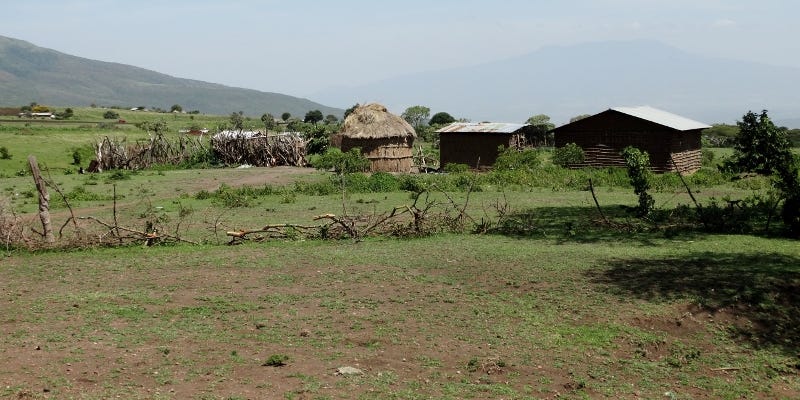
The Longido and Monduli Rangelands Carbon project aims to control more than 970,000 hectares of Maasai territory in northern Tanzania for 40 years. The project proposes a dramatic change to the Maasai’s nomadic herding practices. Centuries-old grazing traditions would be replaced by rigid 14-day rotational grazing schedules.
The project developer is the Tanzanian subsidiary of a US-based organisation called Soils for the Future. Volkswagen ClimatePartner has also invested in the project. Maasai Indigenous people have called on Volkswagen to withdraw from the project.
Mark Ritchie, the founder of Soils for the Future, was one of the lead designers of the disastrous Northern Kenya Grassland Carbon Project. Soils for the Future is developing the Kajiado Rangelands Carbon Project on the other side of the border in Kenya. Between them, the two projects will cover almost 2.5 million hectares.
Ritchie is also the founder of US-based carbon project developer CarbonSolve, which is also involved in both projects. Both Soils for the Future and CarbonSolve are incorporated in the tax haven of Delaware.
Soils for the Future wrote Verra’s methodology (VM0032) for the generation of carbon credits from “sustainable grasslands”.
The Longido and Monduli Rangelands Carbon Project is currently listed as “Under validation” on Verra’s registry. The project was open for public comment for one month to 8 April 2025. A note on Verra’s registry states that, “Any comments received have been uploaded in the ‘Other Documents’ section below.” However, almost four weeks since the comment period closed, Verra has not uploaded any comments.
Survival International and the Maasai International Solidarity Alliance submitted a detailed comment, urging Verra not to certify the project.
Survival International and the Maasai International Solidarity Alliance summarise the fundamental problems as follows:
This project proposes to generate large volumes of carbon credits from a complex and highly variable pastoral system using indirect measurement, contested assumptions, and a governance model that raises serious social concerns. The key risks — non-additionality, leakage, monitoring uncertainty, and lack of permanence — are not incidental. They are structural features of the project design.
“Holistic management”?
The Project Description Document states that,
The principal project activity is a widespread implementation of rapid rotational grazing (RRG) of livestock in the participating communities. Under coordinated grazing plans, livestock will be grouped and moved subject to local day-to-day movement decisions by herders within constraints that follow this set of concepts from rest-rotation grazing and holistic management . . .
“Holistic management” is a concept dreamed up by a Zimbabwean rancher called Allan Savory. He argues that increasing the numbers of livestock on drylands and rotating the grazing can restore the land and address the climate crisis. His 2013 TED Talk has been watched 15 million times.
The Project Description Document refers to Savory’s 2010 book, written with his wife Jody Butterfield, about “The Holistic Management Framework”.
Savory’s ideas have been challenged several times, but the Project Description Document makes no mention of this scientific debate. Instead the PDD refers only to reports in favour of Savory’s ideas — including those written by Mark Ritchie.
Here is some of the scientific research that challenges the ideas of “Holistic Management” and “rapid rotational grazing”:
A 2014 review published in Agricultural Systems, of the evidence supporting holistic management and intensive rotational grazing (IRG) found that, “The vast majority of experimental evidence does not support claims of enhanced ecological benefits in IRG compared to other grazing strategies, including the capacity to increase storage of soil organic carbon.”
Also in 2014, a review published in the International Journal of Biodiversity, is titled, “Holistic Management: Misinformation on the Science of Grazed Ecosystems.” It reported that, “This review could find no peer-reviewed studies that show that this management approach is superior to conventional grazing systems in outcomes.” The review concluded that, “Ecologically, the application of Holistic Management principles of trampling and intensive foraging are as detrimental to plants, soils, water storage, and plant productivity as are conventional grazing systems.”
A 2016 report, published by the Swedish University of Agricultural Sciences, found that “no review study has concluded that holistic grazing is superior to conventional or continuous grazing” and that, “The claimed benefits of holistic grazing thus appear to be exaggerated and/or lack broad scientific support”. The report concludes that “holistic grazing cannot reverse climate change”.
In 2017, Oxford University’s Food and Climate Research Network published a report titled “Grazed and Confused”. The report found that the evidence backing the claims that rotational grazing can sequester carbon to be “thin on the ground and contradictory”. The report found that “grazing livestock – even in a best-case scenario – are net contributors to the climate problem, as are all livestock. Good grazing management cannot offset its own emissions, let alone those arising from other systems of animal production.”
Also in 2017, a meta-analysis of the scientific evidence for Savory’s “holistic planned grazing” found that rotational grazing does not result in statistically significant improvements in plant cover, biomass, or animal productivity, compared to existing grazing patterns.
Allan Savory in debate
In July 2023, the Leverhulme Centre for Nature Recovery hosted a debate between Savory and George Monbiot, the Guardian journalist and author. Monbiot has long been critical of Savory’s ideas — mainly because of the lack of scientific evidence backing them up.
The debate was frustrating and extremely odd, mainly because Savory refused to discuss the title of the debate, “Is livestock grazing essential to mitigating climate change?”
Following the non-debate, Monbiot posted a list of references, on his website, with key quotations, in answer to his two main questions:
Does the Savory method or any other kind of ranching cause net soil carbon storage?
Is significant carbon storage in agricultural soils a viable proposition?
The answer to both questions based on the scientific literature is a resounding “No”.
None of which, of course, is an argument against the importance of livestock and pastoralism to the Maasai’s livelihoods and culture. But it is an argument against using Allan Savory’s ideas, which are not backed by science, to generate carbon credits to allow polluting corporations to continue polluting — and to facilitate a massive land grab of the Maasai’s land.
A petition was filed in kenya that raises substantial issues on KRCP.