

Bloomberg Green: “How the Carbon Offset Market is Slowing the Fight Against Climate Change”

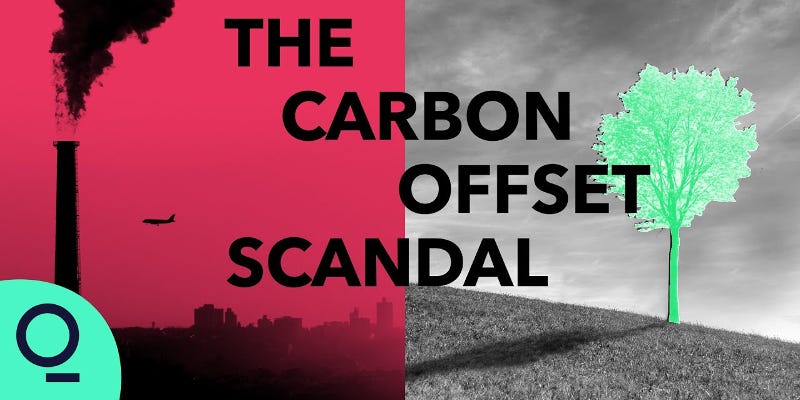
In December 2020, Bloomberg Green published an article looking into some of The Nature Conservancy’s carbon offset projects in the USA. The article describes how TNC became “a dealer of meaningless carbon offsets”.
Four months later, Bloomberg Green reports that TNC is “conducting an internal review of its portfolio of carbon-offset projects”.
Here is REDD-Monitor’s take on the first Bloomberg Green article:

In short, I’m delighted that a major publication like Bloomberg is looking critically at carbon offsets.
But (and it’s a very, very big “but”), the article repeats the myth that, “Scientifically, they [carbon offsets] make sense.” That is simply not true. From the very beginning offsets existed to allow corporations to continue profiting from burning fossil fuels – while giving the appearance of doing something to address the climate crisis. Carbon offsets are a dangerous distraction from the need to leave fossil fuels in the ground.
The Carbon Offset scandal
Last week, Bloomberg put out a video featuring the journalist Ben Elgin, who wrote both stories about The Nature Conservancy:
The title of the video is spot on: “How the Carbon Offset Market is Slowing the Fight Against Climate Change”.
Elgin sets the tone at the start of the video:
It’s very important, given the nature of the climate crisis right now, for the general public to have an understanding of what progress is or is not actually happening. And I think many readers right now, they’ll see these hundreds and hundreds of companies making these big bold climate claims. They could be forgiven to think that we’re well on our way to meeting the emission reduction trajectory we need to be on. And the reality of the matter is we’re just not on that trajectory. A key reason for this sort of disconnect is the use of offsets
that aren’t doing what they claim to be doing.
Which is exactly right, except for the last nine words, so I’ve crossed them out.
It’s not just some offsets (the bad ones, the meaningless ones) that are delaying climate action. It’s the very concept of offsetting that’s has remarkably successfully delayed meaningful action on the climate crisis. As far as the oil industry is concerned, offsets are doing exactly what they have always claimed to be doing – regardless of the whether the offsets are “good” or “bad”.
Mark Trexler, carbon consultant
Elgin explains that one of the difficulties in writing about offsets is finding “good experts who have been steeped in this marketplace and are willing to candidly talk about it”.
One of the people Elgin has been talking to for more than a decade is Mark Trexler.
Trexler is a carbon consultant. In 1988, Trexler started working with the World Resources Institute on the first ever forestry project aimed at offsetting emissions from burning fossil fuels. In this case the project was supposed to offset the emissions from a new 181 MW coal-fired power plant in Connecticut built by AES Corporation. The trees were planted in Guatemala:

The project resulted in land use conflicts. When farmers started planting trees, less land was available for growing food, resulting in food shortages in the area of the project. Far fewer trees were planted than the carbon experts calculated were needed to offset the emissions from AES’s coal-fired power plant.
Trexler mentions that he worked on the Guatemala project, but he doesn’t mention that the project was a dismal failure.
Wilful blindness
Trexler tells us that,
We have a massive potential for sort of wilful blindness. We can convince ourselves of things regardless of what the facts are. And so that’s what tends to happen in these cases.
It’s not that anybody is setting out to commit climate fraud.They sort of walk themselves into a situation and they convince themselves of one thing and that allows them to convince themselves of another thing. But at the end of the day they are doing something that makes no sense at all.
Again, this is spot on, except for one sentence. Offsets are climate fraud. Trexler is being far too kind to carbon offset developers, probably because as he says later on in the video, “I’m a fan of carbon offsets.”
Trexler describes the carbon offsetting climate fraud as follows:
In terms of defining a carbon offset, one of the beauties, so to speak, of greenhouse gases, sort of the silver lining of greenhouse gases, when you put up a molecule of CO2 into the atmosphere, it can be anywhere on the planet in seven days. And therefore, if there’s an option to reduce emissions on the other side of the planet and you can do that very cheaply, as compared to doing it in your factory, for example, then why not pay that person, that factory on the other side of the planet to reduce their emissions? Then you are, in a sense, offsetting your emissions. And the atmosphere doesn’t really see your emissions anymore.
Lawrence Summers’ Principle
This is way too close for comfort to Lawrence Summers’ Principle. In 1991, when he was the World Bank’s chief economist, Summers wrote an internal memo explaining why rich countries should dump toxic waste in the poorest countries:
Just between you and me, shouldn’t the World Bank be encouraging more migration of the dirty industries to the LDCs [Least Developed Countries]? . . . The measurements of the costs of health impairing pollution depends on the foregone earnings from increased morbidity and mortality. From this point of view a given amount of health impairing pollution should be done in the country with the lowest cost, which will be the country with the lowest wages. I think the economic logic behind dumping a load of toxic waste in the lowest wage country is impeccable and we should face up to that.
Bloomberg helpfully provides this diagram to illustrate carbon offsetting:

The factory burns fossil fuels in the Global North and the CO2 molecule flies around the planet to be absorbed by trees in the Global South.
The diagram perfectly illustrates the carbon offsetting climate fraud. Offsets equate CO₂ emitted from burning fossil fuels with CO2 absorbed by trees. While the CO₂ molecules are the same, the impact on the climate is completely different.
In 2004, I co-wrote an article with Jutta Kill of the World Rainforest Movement that describes the difference between fossil CO₂ and tree CO₂:
Fossil fuels, which have been stored for millions of years below the earth, only emit carbon to the atmosphere if they are dug out and burned. The release of carbon is a one way street, because the earth takes many thousands of years to produce fossil fuels and thus to remove the CO₂ permanently from the atmosphere. Trees store carbon for a relatively short period. While trees grow they absorb carbon, but this is released after a few years to the atmosphere. Trees die and decay. They can be attacked by pests. During heat waves they can go up in smoke and flames.
Bloomberg’s diagram is a good illustration of the problem with considering the climate crisis in terms of CO₂ molecules or parts per million. Any hint of politics, capitalism, neoliberalism, colonialism, or history is scrubbed clean from the picture.
Also absent is any hint of the destruction caused by mining fossil fuels (whether mountain top removal for coal, fracking for gas, or tar sands for oil) or the wars conducted to ensure the continued supply of fossil fuels from the Middle East. Neither is there any mention of the pollution (other than CO₂) emitted from factories in the Global North – factories that are often located in low-income communities and communities of colour.
Also excluded from this picture are the communities that live in and around the forest in the Global South chosen to absorb the rich countries CO₂. Again and again, studies of REDD projects have revealed how the poorest of the poor end up paying for REDD through restrictions on their livelihoods.
Carbon Offset Markets and the Kyoto Protocol
Elgin then tells us that carbon offsets were “key with these international climate agreements such as the Kyoto Protocol, which mandated the wealthiest countries reduce their greenhouse gas emissions”.
But Elgin doesn’t tell us that carbon trading and the 1997 Kyoto Protocol was very much made in the USA. Before the Kyoto meeting, the EU wanted a target for cuts in greenhouse gas emissions of 15% by 2010, and a tax on emissions. The US climate negotiating team, led by Al Gore, pushed the target down to 5.2% by 2012, and insisted on carbon trading as part of the agreement.
Net zero
Elgin tells us of the recent flood of corporate promises to reach “net zero”:
We began looking at these corporate claims of dramatically reduced emissions, and we noticed so many of these companies were using carbon offsets to achieve these aims. As we began to look at the carbon offset projects themselves, what we found is that the environmental benefits claimed by these companies are not actually what they seem to be.
This is spot on. And to be fair, the video now shows clips of coal mining:

Elgin continues:
And as we saw and spotted a number of these very aggressive carbon offset projects which appeared to be generating inflated credits, or bogus credits, we saw a number of them were associated with The Nature Conservancy.
The Nature Conservancy
At this point though, the video goes completely off the rails. “This surprised us,” Elgin says. And he gushes about the world’s biggest environmental group, as if TNC has never previously run into any controversy, anywhere.
The Nature Conservancy, of course, is one of the key promoters of “Natural Climate Solutions” and works hand in glove with oil giants like Shell:

Instead of raising the alarm about The Nature Conservancy’s neoliberal version of conservation, Elgin talks about TNC being “very strong in terms of working with corporate partners”. He praises TNC’s “pragmatic and pro-business approach”:
They will not go out and criticise a big polluter, but they’re very happy to work with them. Some might say that’s selling out, but others would say, and those at The Nature Conservancy would say ‘These companies have deep pockets, they can help fund important preservation work, and we have absolutely no problem working with them on this stuff.’
That strikes me as being the perfect description of selling out. TNC takes money from polluting corporations and in return helps to greenwash their image.
The Walt Disney Company
Elgin mentions Disney, which is a big buyer of TNC’s carbon offsets. He points out that Disney has theme parks, cruise lines, office buildings, and television studios. He argues that it’s very difficult for Disney and other companies to change the way they operate.
Disney buys carbon offsets from a project called Pennsylvania Ridges. TNC bought the land in the late 1990s. There was a logging contract on the land and the forest was threatened. An archived version of TNC’s website states that, “The Nature Conservancy has successfully abated these threats,” by buying the land.
Elgin spells out why this is a problem:
So it’s really interesting now. Fast forward two decades, to earlier this year when they put forward this carbon project, and if you look through it, this land is a key part of that carbon project. What they’re now saying is that this land is now once again imminently threatened, 72% of the trees are going to be cut within five years.
Now this is just astounding because land is owned by The Nature Conservancy. They do not clearcut land that they’ve bought through philanthropic donations. So this scenario that they’ve put forward to get carbon revenues is not really plausible.
And what that means is that when you have Disney coming in buying these credits, when it eventually lowers its carbon footprint, because of these credits, well that won’t be a credible, or truthful claim by Disney.
Elgin adds that, “The Nature Conservancy and many others see carbon credits as a pot of money that they can tap into, to further their own, benevolent, aims. But unfortunately what this has resulted in is claims of climate progress that just aren’t really happening.”
The offset registries
The Nature Conservancy, of course, defends its carbon offsetting deals. They are following the rules that the registries set up. “So some would also put some of the blame on registries themselves,” Elgin says. “Because they are setting up the rules which allow these vapid projects to get up and sold.”
Most of The Nature Conservancy’s carbon offsets are sold on the American Carbon Registry, set up in 1996, by Winrock International. The registries set up the rules, and carbon offset projects have to follow those rules.
Elgin notes that,
There’s this tension that’s always there. If the rules are too strict, then it’s going to be very hard for carbon offset projects to get up and running. So there’s this balance going on where the registries want rules that attract projects, but they don’t want it to be so strict where it will disincentivise projects from getting listed.
A race to the bottom
Trexler describes the consequences of this:
One of the challenges with designing carbon offset systems is that there are normally two people at the table, you have buyers and you have sellers. To some extent you have policy makers, but the buyers and the sellers are really the ones with the expertise, with the incentive to really participate hard, make a lot of things happen. The challenge there is that both of them sort of want the same thing, or they’re both happy with the same thing. They’re happy with low cost offsets and a lot of them, because that works for their business model.
You end up, though, with nobody really representing the atmosphere, so to speak. Nobody’s really representing the climate in those discussions, and so the policies end up biasing the whole system. You end up in sort of a race to the bottom. And that’s what we’ve seen happen.
Which is pretty close to a confession that carbon offsetting just doesn’t work.
Trexler repeats the carbon offset climate fraud:
When it comes specifically to the topic of carbon offsets,
I am a fan of carbon offsets, in the sense that they can help mitigate climate change. They absolutely can. But, you know, if we’re not going to do it correctly, in a way that actually does help to mitigate climate change, thenit’s nothing but a distraction.
I crossed out the bit about offsets mitigating climate change. After decades wasted, there is zero evidence that carbon offsets can help mitigate the climate crisis. They were never intended to do so. The decades of inaction on the climate crisis show just how successfully carbon offsets have distracted us from the fact that to prevent the climate crisis we have to stop burning fossil fuels, and the best way to do that is to leave fossil fuels in the ground.
Trexler isn’t quite sitting on the fence on carbon offsets. He’s simultaneously sitting on both side of the fence. But he admits that what we need is systemic change, and not “nibbling around the edges”:
After 30 years, you have to start wondering, is it really just a distraction. And that’s really unfortunate, but that’s where we are. Ultimately, what needs to happen is systemic change. We’re sort of nibbling around the edges with some of these different things. We need to change how we produce energy. We need to change how we transport ourselves. We need to change what and how we eat. We need systemic change associated with transitioning to a low carbon economy.
A lot of what we’re doing today is not promoting systemic change, it’s sort of trying to stick your thumb in the dike to preserve the current system. And at the end of the day that can’t really work.
Then, Trexler shrugs, and the video ends with a statements from The Nature Conservancy and the American Carbon Registry defending their carbon offsets.
Trexler didn’t quite reach the logical conclusion with his comment about the necessity of systemic change. Given his background as a carbon consultant, I’m not convinced he ever will. So I’ll do it for him:
“Carbon offsets are part of the problem because they exist specifically in order to avoid systemic change.”
We shouldn’t be looking for ways to “fix” carbon offsets and carbon markets. We should scrap them.