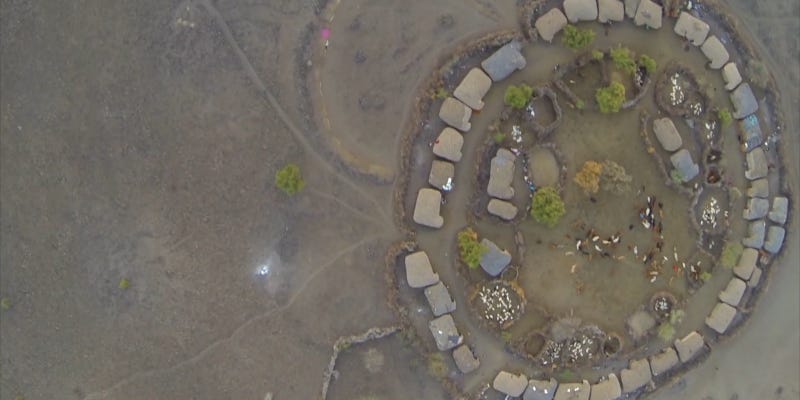
This year is the International Year of Rangelands and Pastoralists. The UN approved the International Year in 2022 and the lead agency is the Food and Agriculture Organisation. In this role, FAO will “coordinate efforts worldwide to demonstrate how rangelands and pastoralists contribute to resilient rural economies, food security, climate solutions and ecosystem preservation and restoration”.
The IYRP Global Alliance Working Group on Pastoralism and Carbon Markets recently published a policy brief titled “Outgrowing offsetting”.
REDD-Monitor is a 100% reader-supported publication. If you can afford it, paid subscriptions support my work. Thank you! REDD-Monitor will never go behind a paywall.
The policy brief argues that “compensatory offsetting cannot deliver credible climate action”. And it notes that where carbon schemes involve pastoralists, “it is often as implementers of externally designed models that override their knowledge, reshape land-use priorities, and impost new forms of control over land and livelihoods”.
The brief highlights the root problems with carbon trading. It argues for shifting the perspective on addressing the climate crisis on to the extraction and burning of fossil fuels. And it ends with calls to action aimed at confronting the causes of the climate crisis directly, instead of “displacing responsibility through compensatory mechanisms”.
pastoral systems — when allowed to operate according to their internal logic — offer a strong starting point for such an approach, not as offset providers, but as foundations for strengthening resilient and equitable ways of living with climate variability.
Offsetting is the wrong way to think about climate action altogether — pastoralism exposes why.
Background
Over the past decade, rangelands have become an important frontier of carbon markets. As voluntary carbon markets are expanding rapidly into pastoral territories, expectations about future carbon revenues are already shaping land-use policy, fiscal planning, national climate strategies, and development narratives.
In this brief, pastoralism refers to livestock-herding systems shaped by building upon the ecological functions of wild herbivores within rangeland environments. Such systems thrived through mobility, flexibility, and collective governance, specialising in making productive use of rangeland variability while managing its risks — alone or in combination with other livelihood strategies. Despite their diversity, rangeland – pastoralism systems are analytically grouped together — and distinguished from other grazing systems — because they are structurally organised around ecological integration.
Most pastoral systems today bear the marks of decades of interventions aimed at replacing or controlling them, restricting mobility, and subordinating social and ecological relations to market requirements by commodifying key resources such as land, water, and labour. Nevertheless, inasmuch as these systems are allowed to operate by their internal logic, their agroecological value is well recognised — lying in sustaining rangelands as dynamic ecosystems while providing food, biodiversity, and livelihoods.
Yet climate finance in pastoral regions is rarely grounded in this value. Carbon schemes typically operate through the principle of offsetting — the idea that new emissions from burning fossil fuels can be cancelled out by carbon sequestration or even avoided emissions elsewhere. Where these schemes involve pastoralists, it is often as implementers of externally designed models that override their knowledge, reshape land-use priorities, and impose new forms of control over land and livelihoods.
Treating fossil fuel emissions as offsettable requires abstracting them from their Earth-system context. This abstraction reframes climate change as a problem of accounting rather than of fossil fuel extraction and combustion. Carbon markets based on offsetting blur distinctions in causal responsibility for climate change and relocate mitigation responsibility onto land, ecosystems, and communities.
This brief argues that compensatory offsetting cannot deliver credible climate action. It does not dispute that land-based mitigation or carbon removals can contribute to limiting warming. It disputes the compensatory logic that treats such mitigation as exchangeable with continued fossil fuel extraction and combustion. Instead, this brief calls for climate finance approaches that support pastoral systems directly, without tying that support to fossil fuel offsetting.
The root problem
1. A false equivalence. The logic at work in offsetting depends on treating fossil carbon and biogenic carbon as equivalent, despite their fundamentally different origins, time dynamics, ecological contexts and roles within the Earth system. In simplified terms, biogenic carbon circulates within living systems, moving between vegetation, soils, animals, and the atmosphere over years or decades. By contrast, fossil carbon, sequestered and accumulated underground over millions of years, is released into the atmosphere through extraction and combustion. Biogenic carbon is part of the contemporary biospheric cycle; fossil carbon is an addition from geological storage into that cycle. Equating these two carbon contexts collapses the crucial distinction between a circulating biological cycle and a one-way geological displacement. This collapse is what allows compensatory offsetting to appear technically coherent. But by stripping fossil carbon from its context and reframing it as an abstract, interchangeable ‘carbon’ unit, we lose sight of why it is a threat: the problem is not carbon in isolation, but a disrupted relationship between carbon cycles, Earth systems, and the social worlds built around them.1
2. Enabling fossil fuel expansion. The logic of offsetting distorts how climate change is understood and addressed, reframing it as an accounting problem rather than confronting its structural causes. It does so by treating fossil emissions and biogenic removals as interchangeable entries in an accounting framework. By presenting continued emissions as technically compensable, offsetting weakens the imperative to phase out fossil fuel extraction and combustion, and reframes their continuation as climate action.
3. Distributing responsibility for climate change. Once systemic differences are removed from the analysis, biogenic processes involved in food production — such as rice cultivation or livestock keeping — can be assigned responsibility for climate change alongside fossil fuel extraction and combustion. For pastoralism, this analytical flattening of distinct carbon cycles has particularly damaging consequences. Biogenic enteric methane emissions are higher under cellulose-rich diets, typical of extensive livestock systems, and often lower under the grain- and concentrate-based diets of intensive systems. When biogenic emissions are abstracted from their ecological context and treated as equivalent to fossil emissions, extensive pastoral systems appear comparatively climate-inefficient. This reinforces long-standing narratives that portray pastoralism as environmentally problematic, while recasting intensification as a form of climate action.
4. Turning mitigation into a rush for land. Offsetting also reframes climate change from a problem of fossil fuel extraction and combustion into one of territorial management. Within offsetting’s accounting framework, land-based living systems appear as the most accessible sites for adjustment. Land is valued not for what it sustains, but for what it can represent within carbon accounts. The premise that fossil emissions can be “balanced” elsewhere drives a search for conditions where land-based living systems can be mobilised at lowest cost. Territories shaped by legal, political, and economic asymmetries become preferred targets. Pastoral and Indigenous lands — forests, rangelands, and wetlands — are therefore integral to how offsetting operates.
5. Turning living systems into carbon property. To make offsets credible and tradable, land must be transformed into a controlled asset, and the communities who depend on it reorganised within that asset framework. This requires mapping boundaries, fixing baselines, defining binding responsibilities, and standardising land use practices — thereby redeploying conventional pastoral development approaches under a new climate rationale. Because offsetting depends on translating complex social relations into simplified, enforceable claims that can circulate as financial value, it is structurally hostile to flexibility — including mobility, shared tenure, seasonal use, and negotiated access.
6. Rewarding narratives of rangeland degradation. Carbon offsetting depends on demonstrating additionality: the requirement to show that carbon gains would not have occurred in the absence of the project. This makes degraded land particularly valuable as raw material for credit generation. In rangelands, assessing degradation is notoriously difficult. Assessments are inherently scale- and goal-dependent, relying on fixed management benchmarks and expert classifications that poorly fit variable pastoral landscapes. Regardless of intent, baseline definitions and classifications shape the projected volume of credits that can be generated. As a result, degraded rangeland becomes a speculative asset: the larger the area classified as degraded at baseline, the greater the stream of future carbon gains that can be modelled and leveraged. In this way, offsetting indirectly gives institutional and financial weight to narratives that attribute environmental decline to pastoralism.
Shifting the perspective
1. Returning carbon to its Earth-system context. Climate change is a problem of context and relationships, not of carbon in the abstract: it arises from the extraction of fossil carbon from geological storage and its transfer into contemporary biospheric cycles. It is this destabilising transfer within the Earth system that makes its accumulation in the atmosphere disruptive. Re-centring a relational understanding of carbon is essential to analysing climate change and its mitigation, and is a prerequisite for coherent climate policy.
2. Biogenic systems are misframed as responsible for climate change. Climate destabilisation is driven by cumulative geological addition. Methane from pastoral livestock circulates within short carbon cycles and does not constitute a geological addition to the atmosphere. Claims about pastoralism’s role in climate change rely on removing the analytical distinction between biogenic and fossil emissions. Under this abstraction, even the processes through which biogenic systems may become net sources — often as a consequence of fossil-fuel-driven transformations and ill-designed development interventions — are obscured rather than addressed. This generates a distorted policy agenda that diverts attention from the accelerating extraction and combustion of fossil fuels. When fossil carbon is understood in its Earth-system context, expecting pastoralists — or other actors whose emissions are biogenic — to compensate for fossil emissions loses physical and policy coherence.
3. Climate mitigation is being sought in the wrong place. Climate change is structurally driven by the extraction and combustion of fossil fuels rather than by the routine management of land-based carbon cycles. Land-use change becomes a significant driver of climate change where it is embedded in fossil-fuel-driven systems of extraction, production, and consumption — most visibly through industrial-scale deforestation. Treating land as the primary site of mitigation confuses structural drivers with downstream effects and redirects attention away from energy systems, where emissions are generated and accumulate. This mismatch is not confined to carbon: biodiversity and other nature-based crediting schemes reproduce the same compensatory logic, relocating responsibility onto land and livelihoods rather than addressing fossil fuel dependence.
4. Climate responsibility and risk are displaced downward. Displacement is not confined to individual projects and communities; it reflects a broader configuration within contemporary climate governance. Mitigation pressure is passed down a chain of responsibility, shifting away from centres of economic and political power — where the benefits of fossil energy are concentrated — and toward those least able to contest the burden, from powerful economies to weaker states and from states to communities. At each step, responsibility is reassigned while fossil fuel extraction and consumption continue largely untouched. Offset buyers are able to claim climate action without assuming long-term responsibility for climate outcomes. When carbon is lost — through fire, drought, pests, climate variability, or political instability — this can be treated as local failure, attributed to poor management or non-compliance. Pastoralists, Indigenous peoples, and communities in small-scale farming systems are at the lower end of this downward reallocation.
5. Pastoralism is reduced to a mitigation tool. Offsetting reframes pastoralism as a vehicle of mitigation. Communities enter long-term commitments to manage carbon on behalf of external emitters, and livelihoods are recast as mitigation delivery systems. Pastoralists are positioned as implementers within externally defined frameworks, with beneficiary status conditional on compliance, rather than as political subjects and rights-holders in their own right. In pastoral rangelands, these arrangements often align with and accelerate processes of territorial fragmentation, external control, and the reorganisation of authority over land use, in favour of externally defined management frameworks. Even customary practices that sustain pastoralism’s ecological integration become subject to monitoring and restriction in the name of carbon accountability, while collective governance and the flexibility that allows pastoral systems to respond productively to climatic variability are weakened. Rather than seeking to retrofit pastoralists into offset frameworks, climate policy should begin from pastoralism as an ecologically integrated land-use system that already embodies strategies for living productively with climate variability.
6. Beyond safeguards. Debate on carbon markets frequently focuses on strengthening safeguards to address consent failures, lack of transparency, weak accountability, inequitable benefit-sharing, and other well-documented harms. In pastoral rangelands, benefit flows and decision-making under carbon schemes frequently bypass pastoralist women’s roles and authority. Where carbon schemes are already operating, safeguards are necessary. However, even well-designed and rigorously applied safeguards leave the decontextualised logic of offsetting untouched. Safeguards cannot resolve a problem that lies in the structural logic of offsetting itself and therefore cannot provide a basis for confidence in initiating new schemes.
7. Climate finance does not need an offset substitute. Climate finance does not need to rely on performance-based incentives or quantified mitigation outcomes to be effective. Any ‘equivalent’ replacement for carbon offsetting would keep climate finance locked within the same compensatory logic that underpins carbon markets — treating fossil fuel emissions as if they could be counterbalanced by manipulating the biogenic carbon cycle. In practice, forms of public climate finance already support livelihoods and ecosystems without treating them as substitutes for emissions reduction — through long-term institutional support, investment in the political and institutional conditions that enable pastoral governance and mobility to function, resilience funding in response to shocks, and services designed to work in highly variable conditions. Scaled up and reoriented around pastoral realities, such approaches strengthen pastoral systems directly, without enrolling them in mitigation accounting or offset frameworks.
Calls to action
These calls recognise that climate finance capable of addressing the causes of climate change is urgently needed. This brief supports climate action that confronts those causes directly, rather than displacing responsibility through compensatory mechanisms. It argues that pastoral systems — when allowed to operate according to their internal logic — offer a strong starting point for such an approach, not as offset providers, but as foundations for strengthening resilient and equitable ways of living with climate variability. To uphold justice, integrity, and genuine climate action in rangelands, governments, funding agencies, and project developers should:
1. Stop treating rangelands as offsets for continued fossil fuel use. Governments and funding agencies should end the approval and promotion of rangeland-based credits used as compensation for ongoing fossil emissions. The core issue is structural: offsetting relies on a false equivalence between fossil emissions and biogenic processes and therefore cannot deliver credible climate action. Offsetting also blurs distinctions in causal responsibility for climate change and systematically relocates mitigation responsibility onto land-based systems. Rangeland climate finance is of crucial importance — its credibility and legitimacy depend on not being structured as compensation for continued fossil fuel use.
2. Redirect climate finance toward public support and redistribution. The prevailing architecture of climate finance channels resources into carbon accounting infrastructures and performance-based mechanisms that institutionalise offsetting within climate governance, embedding compensatory logics that leave fossil fuel dependence largely intact. This configuration misaligns climate finance with the structural drivers of climate change. Instead, climate finance should be redirected away from compensatory logics toward public investment designed to strengthen pastoralist livelihoods and institutions on their own terms. This means supporting pastoralism as a functioning livelihood system — through long-term investment in governance, mobility, conflict management, and mobility-compatible services. Redirected public investment should be accessible to pastoralist institutions and collective governance arrangements, and support pastoralist-led policy engagement, advocacy, and institutional strengthening, including the roles and authority of pastoralist women and youth. Such investment sustains the ecological functions pastoral systems already perform across rangeland landscapes, and enables the full range of functions they can perform when allowed to operate according to their own logic — without enrolling them in mitigation accounting or offset frameworks. Calls to support pastoralism on these terms have been made for many years and still await an effective public response.
3. Remove political, legal, and spatial barriers that entrench power imbalances. Rather than reshaping pastoralism to fit carbon markets, governments should address the political and economic asymmetries that constrain pastoral systems — restricted mobility, fragmented territories, unequal bargaining power, and weakened pastoralist institutions. These are not technical problems to be managed through projects, but structural conditions that climate finance has often bypassed or reinforced. Any public support for pastoralism should be channelled through pastoralist institutions and collective governance arrangements, recognising pastoralists as political actors — not compliance agents. Even formal recognition of rights, in contexts of severe political and economic asymmetries, can facilitate lawful dispossession by enabling irreversible external claims over land and resources.
4. Separate climate action from carbon accounting. Governments and donors should stop treating carbon metrics as a proxy for climate action. Sustaining rangeland – pastoralism systems on their own terms, with the institutions that underpin them, is a valuable climate strategy in its own right — it does not need to be justified as compensation for continued fossil fuel use. A principled separation between land-based support and responsibility for emissions reduction is essential to restore integrity and coherence to climate policy. This separation must apply beyond carbon accounting, to prevent climate action from being re-captured through substitute metrics such as biodiversity units, water units, or other forms of quantified environmental compensation.
5. Break the downward chain of climate responsibility. Downward displacement of climate responsibility relies on each downstream stage passing it on. Breaking this downward spiral is therefore a collective obligation across the entire chain through which climate action is defined, mediated, and implemented. Governments, donors, and implementing institutions must stop passing downward responsibility for mitigation that properly belongs upstream in the global context. Good intentions and local co-benefits do not change the structural effect of compensatory frameworks: they relocate responsibility and risk away from fossil fuel dependence. Actors operating alongside this chain — including advocates and experts involved in knowledge production — must refrain from accepting this displacement or contributing to its normalisation by leaving it unquestioned. Climate governance should explicitly prevent the relocation of mitigation duties and climate risk onto actors with diminishing power to refuse them, and ensure that responsibility for emissions reduction remains with those who generate and benefit most from fossil fuel use.
Key sources
FAO 2021. Pastoralism: Making Variability Work, Animal Production and Health Paper No. 185, Food and Agriculture Organization of the United Nations, Rome.
IPCC 2021. Climate Change 2021: The Physical Science Basis. Contribution of Working Group I to the Sixth Assessment Report of the Intergovernmental Panel on Climate Change. Cambridge University Press, Cambridge, United Kingdom and New York, NY, USA.
Lohmann L. 2006. Carbon Trading. A critical conversation on climate change, privatisation and power. Development Dialogue 48.
Saifuddin M., Abramoff R.Z., Foster E.J., and McClelland S.C. 2024. Soil carbon offset markets are not a just climate solution. Frontiers in Ecology and the Environment 22(7): e2781.
Sayre N.F. 2017. The Politics of Scale: A History of Rangeland Science, University of Chicago Press, Chicago.
Acknowledgements: This brief has been prepared by the IYRP Global Alliance Working Group on Pastoralism and Carbon Markets, for the International Year of Rangelands and Pastoralists (IYRP). Written by Saverio Krätli, Blamah Jalloh, Wenjun Li, Pierre Hiernaux, Habibou Assouma, Michelle Venter, Linda Pappagallo, Hassan Roba, Ariell Ahearn, Hussein Tadicha, Véronique Ancey, Malih Ole Kaunga, Lilli Scheiterle, Jane Meriwas, Francesca Di Matteo, Liban Golicha, Sergio Magnani, Jacob Lekaitogo and Karl Wagner.
Suggested citation: IYRP Global Alliance Working Group on Pastoralism and Carbon Markets. 2026. Outgrowing offsetting. Published by IYRP Global Alliance Secretariat.