

Sham Presidential Commissions in Tanzania recommend mass evictions of Indigenous Maasai from Ngorongoro Conservation Area
“If these extremely biased and reckless recommendations are implemented, it will be the end of our people in Ngorongoro.”

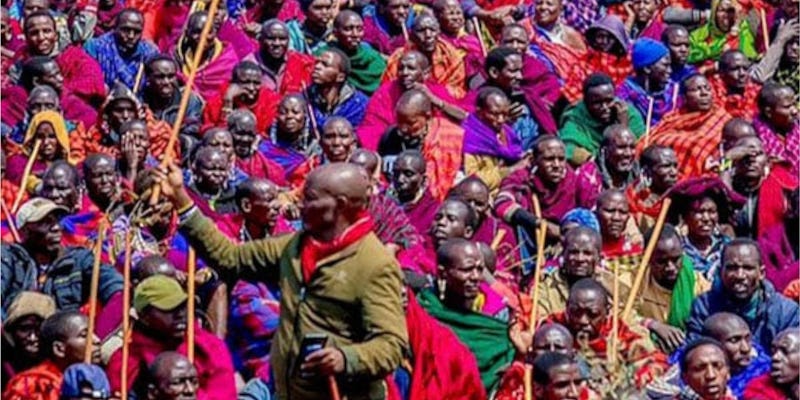
In December 2024, the Tanzanian government formed two Commissions following evictions and large-scale protests in 2024 in the Ngorongoro Conservation Area. In February 2025, the Tanzanian government launched the “Presidential Commission on Land in Ngorongoro” and the “Presidential Commission on Relocation from Ngorongoro”. The Commissions were supposed to take three months and were supposed to release their findings at regular intervals. Instead, for more than a year, the government shared no information and published no reports.
On 12 March 20206, the two Commissions’ reports were delivered to Tanzania’s President Samia Suluhu Hassan. The government has still not published the reports, but the findings have been widely reported in Tanzania and were presented at an official event.
The Commissions failed to uphold the rights of the Indigenous Maasai to their ancestral lands and instead are recommending the mass eviction of Indigenous Maasai communities from the Ngorongoro Conservation Area.
Survival International summarises the two Commissions’ reports and recommendations as follows:
Backed the previous evictions and called for them to continue, including in the UNESCO World Heritage Sites of Ngorongoro and neighboring Lake Natron.
Described the long-standing Maasai presence in the area as an “environmental pressure” that needs to be reduced.
Threatened local NGOs that support the Maasai, accusing them of “spreading misinformation or propaganda” because they “conflict with government interests.”
Called for the “relocation” of all “non-conservation activities” [in other words, Maasai occupancy of the land] outside the conservation areas.
Called for existing recognition of the Maasai people’s right to live in the Ngorongoro area to be removed.
President Suluhu accepted the recommendations and said she “will act on them”.
Survival International quotes an anonymous Maasai spokesperson as saying,
“We are blamed for environmental degradation while the unchecked expansion of tourism is ignored. Forced relocation, disguised as policy, has deprived our people of basic rights and dignity. We reject any continuation of these measures and condemn the Commission’s failure to reflect the voices, realities, and rights of our people.”
The Maasai are opposed to being kicked out of their territory. Nevertheless, the government claims that the evictions are “voluntary relocations”.
Fortress conservation
The Ngorongoro Conservation Area is a UNESCO World Heritage Site. When the conservation area was established in 1959, the Maasai were specifically allowed to live and graze livestock in Ngorongoro. Instead of upholding the rights of the Indigenous Maasai, UNESCO’s World Heritage Committee backs “voluntary relocations”. UNESCO and the Tanzanian government are promoting a model of “fortress conservation” that goes hand in glove with human rights abuses and violence.
The Commissions also recommend further restrictions on the livelihoods of Maasai communities near Lake Natron and in Loliondo.
In a statement, Anuradha Mittal, Executive Director of the Oakland Institute, says,
“These sham findings are the latest attempt by the government to rapidly expand its brutal fortress conservation model across the country, threatening hundreds of thousands of Indigenous lives in blind pursuit of tourism dollars that have failed to trickle down to improve the lives of the poor Tanzanians and the local communities.
“These commissions have no credibility. From the start, they were tasked with rubber stamping the government’s plans to evict the Indigenous Maasai so their land can be a safari and hunting playground for the rich foreign tourists. One cannot be fooled by their ‘findings’ and international solidarity must be mobilized to uphold Maasai’s rights to their ancestral land.”
“Outright lies”
The Oakland Institute reports a Maasai elder, who remains anonymous out of fear of government reprisal, as saying,
“The commissions’ recommendations are based on outright lies about the environmental impacts of the Maasai, while completely ignoring the real damage caused by rapid tourism expansion. If these extremely biased and reckless recommendations are implemented, it will be the end of our people in Ngorongoro.”
Violence started just three days after the reports were delivered to President Suluhu. On 15 March 2026, Park rangers harassed people in the Ndutu area. Three community members were beaten and arrested. Others received notices to vacate. The aim is to force the Maasai out to make way for an expansion of tourism.
Caroline Pearce, Survival International’s director, comments,
“These commissions were a sham, a gimmick designed to give Tanzania’s violent persecution of the Maasai a veneer of respectability. It was widely predicted that they’d back further evictions: the whole saga just confirms that colonial-style fortress conservation is alive and well in Tanzania today, and enthusiastically endorsed by UNESCO.
“These recommendations give the green light to more evictions, in Ngorongoro and beyond. And while the Maasai are robbed of their lands and livelihood, the government, tour operators and so-called conservationists will enrich themselves from a landscape emptied of its original owners.”
The Maasai International Solidarity Alliance released a statement that categorically rejects the Commissions’ recommendations. MISA states that the Terms of Reference were “designed to rubber-stamp decisions that had already been made”.
“Our position is firm,” MISA states. “We will remain on our land. We want genuine dialogue, not oppression”